
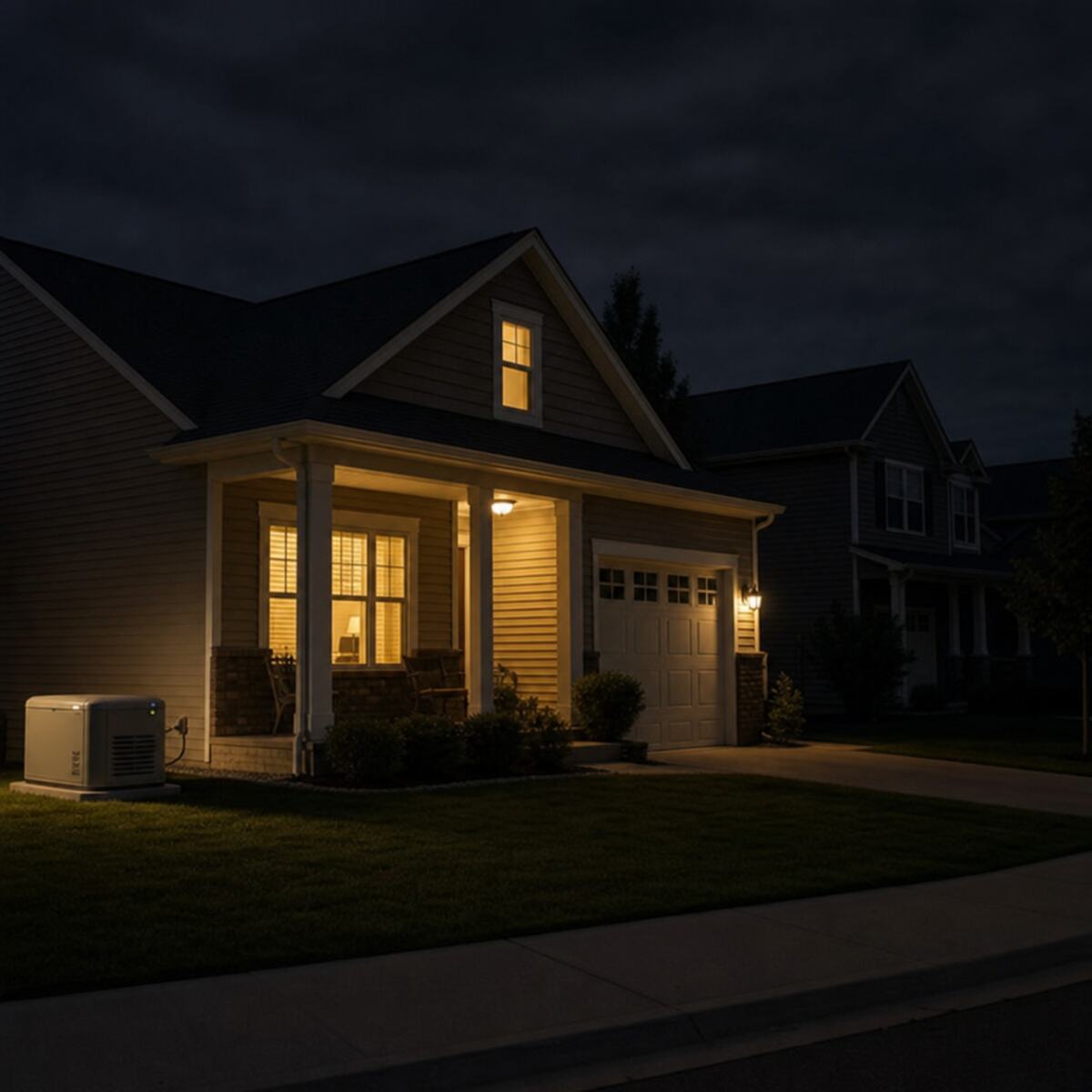

When the Lights Go Out, Your Plan Should Already Be On
A generator is not just a machine you buy. It is a promise you make to your household: the refrigerator stays cold, the sump pump keeps working, medical equipment remains powered, and the dark does not get to decide how the night goes.Find the emergency generator.
But choosing an emergency generator can feel like standing in the hardware aisle during a storm warning, staring at wattage numbers, fuel labels, transfer switch warnings, and price tags that all seem to speak a different language.
The good news: you do not need to become an electrician, mechanic, or survival expert to make a smart choice. You do need to understand a few fundamentals:
- What you actually need to power
- How much starting and running wattage those items require
- Which fuel makes sense for your situation
- Whether you need a portable generator, standby generator, inverter generator, or battery system
- How to connect equipment safely without carbon monoxide risk or dangerous backfeeding
- How to maintain the system so it works when the next power outage arrives
This guide walks you through the decision from the ground up. No panic buying. No guesswork. Just a clear path to the right backup power plan for your home, apartment, RV, jobsite, or emergency kit.
The Quick Decision Tree
If you want the shortest path to a smart choice, start here.
If you only need to charge phones, run lights, power a laptop, or keep a small medical device running
Consider:
- Portable battery power station
- Small inverter generator
- Solar-compatible battery system
Best for:
- Apartments
- Condos
- Short outages
- Quiet operation
- Indoor-safe power from batteries only
Important note: fuel-burning generators must never be used indoors, on balconies, in garages, or near open windows.
If you need to run a refrigerator, freezer, Wi-Fi, lights, and a few outlets
Consider:
- Medium portable generator
- Inverter generator in the 2,000 to 4,500 watt range
- Portable generator connected through a transfer switch or interlock
Best for:
- Most homeowners preparing for occasional outages
- Food preservation
- Basic comfort
- Moderate fuel use
If you need to run a well pump, sump pump, furnace blower, refrigerator, freezer, and selected circuits
Consider:
- Larger portable generator
- Manual transfer switch
- Generator interlock kit installed by a qualified electrician
- Dual-fuel model if propane storage is attractive
Best for:
- Homes with critical hardwired systems
- Rural properties
- Storm-prone areas
- Households that need more than extension cords can safely provide
If you need automatic whole-home backup power
Consider:
- Permanently installed standby generator
- Natural gas or propane fuel supply
- Automatic transfer switch
- Professional installation and permits
Best for:
- Frequent outages
- Medical needs
- Larger homes
- Remote work continuity
- Homeowners who travel and want automatic protection
If you live in an apartment or rental
Consider:
- Battery power station
- UPS units for computers and internet equipment
- Small solar charging panel where allowed
- Shared emergency plan with building management
Avoid:
- Gasoline, propane, diesel, or natural gas generators on balconies, inside units, in hallways, or near windows
If you own an RV
Consider:
- Inverter generator for quiet, clean power
- Built-in RV generator if already equipped
- Solar and battery upgrades
- Generator sized for air conditioning starting load
Best focus:
- Noise rules
- Fuel storage
- campground restrictions
- Carbon monoxide safety
Start With the Real Question: What Must Stay On?
The biggest mistake people make is shopping by generator size before deciding what they need to power.
A generator is not magic. It is a limited power source. The more you ask it to do, the larger, louder, heavier, thirstier, and more expensive it becomes. A wise emergency power plan begins with priorities.
Think in layers.
Layer One: Survival and Safety
These are the essentials you may need during an extended power outage:
- Medical devices
- Refrigerator or freezer
- Sump pump
- Well pump
- Furnace blower or boiler controls
- Basic lighting
- Phone charging
- Internet modem and router
- Security system
- Garage door opener if needed for access
Layer Two: Comfort and Continuity
These items make an outage easier but may not be essential:
- Microwave
- Coffee maker
- Television
- Fans
- Window air conditioner
- Portable heater where safely appropriate
- Home office equipment
- Washer or small appliance use on a rotating basis
Layer Three: Convenience and Whole-Home Living
These require more planning and often more money:
- Central air conditioning
- Electric water heater
- Electric range or oven
- Clothes dryer
- Large workshop tools
- Multiple HVAC systems
- Pool pumps
- Whole-home power without lifestyle changes
Here is the quiet truth: most households do not need to power everything. They need to power the right things.
If your goal is to keep food cold, phones charged, basement dry, and heat available in winter, a carefully sized portable generator may serve you well. If your goal is to live normally through long outages with minimal effort, a standby system may be the better fit.
Understanding Watts Without Getting Lost
Generators are rated in watts. That single word causes a surprising amount of confusion because there are two wattage numbers that matter.
Running Watts
Running watts are the amount of power a device needs after it is already operating.
For example:
- A refrigerator may run at a modest wattage once the compressor is moving.
- A lamp has a steady wattage.
- A Wi-Fi router draws a small, continuous amount.
Running watts tell you how much load your generator must carry continuously.
Starting Watts or Surge Watts
Starting watts, also called surge watts, are the brief extra power required when a motor starts.
Appliances with motors or compressors often need a surge at startup, including:
- Refrigerators
- Freezers
- Sump pumps
- Well pumps
- Furnace blowers
- Air conditioners
- Power tools
This surge may last only a moment, but your generator must handle it. If it cannot, the appliance may fail to start, the generator may trip, or voltage may sag.
Why Surge Matters So Much
Imagine carrying groceries. Walking across the kitchen with the bags is the running load. Lifting them from the floor is the starting load. That first lift takes more effort.
Generators work the same way. A model advertised with a large “starting watt” number may have a lower continuous rating. Always look at both numbers.
If a generator is listed as 5,000 starting watts and 4,000 running watts, plan around the 4,000 running watts and make sure your highest startup demands do not exceed the surge capacity.
How to Size an Emergency Generator
Sizing is part math, part judgment, and part restraint.
Step One: List the Items You Want to Power
Write down every item you expect to run during an outage. Be honest. “Just the basics” often expands to include the microwave, coffee maker, TV, modem, lights, sump pump, and three phone chargers.
Group items into categories:
- Must run continuously
- Must run occasionally
- Can wait
- Nice to have
Step Two: Find the Wattage
You can usually find wattage in one of these places:
- The appliance label
- The owner’s manual
- The manufacturer’s website
- A nameplate showing volts and amps
If the label gives amps instead of watts, use this basic formula:
Watts equals volts multiplied by amps.
A 120-volt appliance drawing 5 amps uses about 600 watts.
Step Three: Account for Starting Loads
For motor-driven equipment, note the surge requirement. If the exact number is not available, use conservative estimates and consult an electrician for hardwired systems such as well pumps, furnace equipment, or central HVAC.
Items that often deserve extra attention include:
- Sump pumps
- Well pumps
- Refrigerators
- Freezers
- Air conditioners
- Furnace blowers
- Garage door openers
Step Four: Add Running Watts
Add up the running watts of everything you want to operate at the same time.
Then ask a practical question: do all of these need to run at once?
For example, you may not need to run a microwave while the coffee maker and toaster are operating. You can rotate larger loads to keep your generator smaller and more efficient.
Step Five: Add the Largest Surge Load
Take your total running watts and add the largest expected starting surge that may occur while other items are already running.
This gives you a more realistic minimum generator size.
Step Six: Add Breathing Room
Do not size your generator so it runs at maximum capacity all the time. A little margin helps with performance, heat, future needs, and unexpected loads.
A common planning approach is to avoid loading a generator continuously to its absolute limit. Leave room for startup surges and ordinary human forgetfulness.
Common Generator Size Ranges
Exact needs vary, but these ranges can help you think clearly.
Small Battery Stations and Compact Inverter Generators
Often used for:
- Phones
- Tablets
- Laptops
- LED lights
- Small fans
- Internet equipment
- CPAP machines, depending on model and runtime needs
Best for:
- Apartments
- Short outages
- Quiet operation
- Camping
- Minimal emergency backup
Limitations:
- Not ideal for major appliances unless specifically sized for them
- Battery systems must be recharged
- Small fuel generators have limited capacity
Mid-Size Portable Generators
Often used for:
- Refrigerator
- Freezer
- Lights
- Fans
- Router and modem
- Microwave used occasionally
- Sump pump, depending on size
Best for:
- Basic home outage coverage
- Food preservation
- Portable emergency use
Limitations:
- Requires manual setup
- Needs safe outdoor placement
- Fuel storage must be planned
- Extension cords alone may not power hardwired systems
Large Portable Generators
Often used for:
- Multiple appliances
- Well pump
- Sump pump
- Furnace blower
- Several household circuits
- Some larger tools
Best for:
- Rural homes
- Larger emergency loads
- Manual whole-panel connection through proper equipment
Limitations:
- Heavy
- Louder
- Higher fuel use
- May require 240-volt capability
- Needs transfer switch or interlock for safe panel connection
Standby Generators
Often used for:
- Selected circuits automatically
- Large portions of a home
- Whole-home backup depending on size
- Medical and accessibility needs
- Homes with frequent outages
Best for:
- Automatic operation
- Long-duration outages where fuel supply is stable
- Homeowners who want minimal setup
Limitations:
- Higher purchase and installation cost
- Requires professional installation
- May require permits, inspections, and utility coordination
- Ongoing maintenance is still necessary
Portable Generator vs Standby Generator
This is one of the biggest decisions you will make.
Portable Generator
A portable generator is moved into place when needed, fueled manually, started manually, and connected to appliances or circuits through approved methods.
Benefits:
- Lower upfront cost than standby systems
- Can be stored when not in use
- Useful for camping, jobsites, and remote tasks
- Available in many sizes
- Some models run on more than one fuel
Tradeoffs:
- Requires setup during bad weather or darkness
- Must be placed outdoors at a safe distance
- Requires fuel handling
- Needs maintenance even if rarely used
- Can be noisy
- Can be dangerous if connected improperly
A portable generator is often the practical choice for homeowners who want emergency backup without investing in a permanent system.
Standby Generator
A standby generator is permanently installed outside the home. It usually connects to natural gas or a large propane supply and starts automatically when utility power fails.
Benefits:
- Automatic startup
- Can support larger loads
- No extension cords across the floor
- Often integrates with an automatic transfer switch
- Convenient for frequent or prolonged outages
Tradeoffs:
- Higher cost
- Requires professional installation
- Needs code-compliant placement
- Requires maintenance and periodic testing
- May need permits and inspections
A standby generator is not simply a bigger portable generator. It is a home system. Treat it like HVAC equipment or electrical service equipment: plan carefully, install professionally, and maintain consistently.
Inverter vs Conventional Generators
Not all generators produce power the same way.
Conventional Generators
Conventional generators use an engine and alternator to produce electricity. They are common, powerful, and often less expensive per watt.
Benefits:
- Good value for high wattage
- Available in large portable sizes
- Useful for heavy loads
- Familiar design and widespread availability
Tradeoffs:
- Often louder
- Less fuel-efficient at light loads
- Power quality may vary more than inverter models
- Heavier and bulkier in many cases
Conventional generators can be excellent for running pumps, refrigerators, tools, and household circuits when properly sized and connected.
Inverter Generators
Inverter generators produce electricity, convert it, and regulate it electronically to deliver cleaner, more stable power. They often adjust engine speed based on load.
Benefits:
- Quieter operation
- Better fuel efficiency at lighter loads
- Cleaner power for sensitive electronics
- Often lighter in smaller sizes
- Popular for camping, RVs, and home electronics
Tradeoffs:
- Higher cost per watt
- Smaller models may not handle large home loads
- Large inverter models can still be expensive and heavy
If you plan to power laptops, networking equipment, TVs, or sensitive electronics, an inverter generator is attractive. If your main goal is raw emergency power for pumps and appliances, a conventional model may be sufficient when paired with good usage habits.
What About “Clean Power”?
Modern electronics are more tolerant than many people assume, but voltage stability still matters. Inverter generators are generally favored for sensitive electronics because they deliver more consistent power. For computers, network equipment, and home office setups, you may also use surge protection or an uninterruptible power supply.
Fuel Types: The Heart of the Decision
Fuel determines more than runtime. It affects storage, cost, safety, availability during disasters, maintenance, and convenience.
There is no perfect fuel. There is only the fuel that best fits your situation.
Gasoline Generators
Gasoline is the most common fuel for portable generators.
Benefits of Gasoline
- Easy to find in ordinary times
- High power output
- Widely supported by portable generator models
- Familiar to most homeowners
- Good for occasional use
Tradeoffs of Gasoline
- Degrades in storage
- Requires fuel stabilizer and rotation
- May be hard to buy during widespread outages
- Spills and fumes create fire risk
- Carburetors can gum up if fuel is left sitting
Gasoline works well if you are disciplined about storage and maintenance. It works poorly if you buy fuel once, forget it in the garage for two years, and expect your generator to roar to life in the middle of a storm.
Propane Generators
Propane is popular for dual-fuel portable generators and standby units.
Benefits of Propane
- Stores well for long periods in proper cylinders or tanks
- Cleaner-burning than gasoline in many small-engine contexts
- Often easier to store for emergency use
- Available for grills, heaters, RVs, and home tanks
- Dual-fuel generators can switch between gasoline and propane depending on model
Tradeoffs of Propane
- Lower power output than gasoline on many portable models
- Runtime depends on cylinder size and load
- Cold weather can affect vaporization from small cylinders
- Cylinders must be stored and transported safely
Propane is a favorite for preparedness-minded households because it stores so well. If your emergency generator can run on propane, you may avoid some of the headaches associated with stale gasoline.
Diesel Generators
Diesel is common in commercial, agricultural, industrial, and some larger residential applications.
Benefits of Diesel
- Efficient under heavy loads
- Durable engine designs in many larger units
- Common for long-running backup systems
- Less volatile than gasoline
Tradeoffs of Diesel
- Less common for small residential portable generators
- Fuel storage still requires care
- Can gel in cold conditions without proper treatment
- Engines may be louder and heavier
- Emissions rules and local restrictions may matter
Diesel can be a strong choice for larger properties, farms, workshops, and commercial backup needs. For the average homeowner seeking simple emergency power, gasoline, propane, natural gas, or battery options are usually more common.
Natural Gas Generators
Natural gas is common for standby generators connected to a home gas supply.
Benefits of Natural Gas
- No gasoline storage
- Continuous fuel supply where service remains available
- Convenient for automatic standby systems
- No manual refueling during an outage
Tradeoffs of Natural Gas
- Not available at every property
- Utility gas service can be disrupted in some emergencies
- Installation must be done correctly
- Output may differ from propane or gasoline ratings
- Requires coordination with gas line capacity
Natural gas is convenient because it removes the fuel-can problem. However, your installer must confirm that your gas service can support the generator and other gas appliances.
Battery Power Stations and Solar Generators
Many people use “solar generator” to describe a battery power station that can be recharged by solar panels. These systems do not generate power the way an engine-driven generator does. They store power and deliver it through outlets, USB ports, and DC connections.
Benefits of Battery Systems
- Indoor-safe during operation
- Silent or nearly silent
- No engine exhaust
- No gasoline storage
- Great for electronics and small appliances
- Can pair with solar panels for recharging
Tradeoffs of Battery Systems
- Limited capacity compared with fuel-powered systems
- Recharging can be slow, especially from solar in cloudy weather
- Large systems can be expensive
- Not all can start motor loads
- Runtime depends heavily on battery size and load
Battery systems are excellent for apartments, medical device planning, communications, lighting, and short-term resilience. They are less ideal if you need to run large pumps, central HVAC, or heavy appliances for days unless you invest in a substantial system.
Dual-Fuel and Tri-Fuel Generators
Dual-fuel generators typically run on gasoline or propane. Tri-fuel models may add natural gas.
Why Multi-Fuel Flexibility Helps
During a widespread outage, fuel availability changes quickly. Gas stations may lose power. Propane exchanges may sell out. Natural gas may be available in some events and not others.
A multi-fuel generator gives you options.
Benefits:
- More flexibility during shortages
- Propane storage for long-term readiness
- Gasoline option for maximum output on many models
- Natural gas convenience on some tri-fuel units
Tradeoffs:
- More parts and connections to understand
- Different wattage ratings by fuel
- Requires proper hoses, regulators, and installation practices
- Natural gas connection should be handled by qualified professionals
If you choose a dual-fuel or tri-fuel generator, read the manual before the emergency. Know how to switch fuels, how to shut valves, and what output changes to expect.
Transfer Switch and Interlock Basics
This section matters because it is where convenience and safety meet.
You cannot simply plug a generator into a wall outlet to “power the house.” That practice, often called backfeeding, is dangerous and can send electricity onto utility lines or energize circuits in unsafe ways. It can injure or kill utility workers, neighbors, or people inside the home. It can also damage your generator and electrical system.
If you want a generator to power household circuits, you need a safe, code-compliant method.
Extension Cords
For small portable generator use, heavy-duty outdoor-rated extension cords may be used to connect individual appliances directly to the generator.
This can work for:
- Refrigerator
- Freezer
- Lamps
- Phone chargers
- Small electronics
- Some plug-in appliances
Limitations:
- Cords must be properly rated
- Cords create trip hazards
- Hardwired systems cannot be powered this way
- You must avoid overloading cords and outlets
- Doors or windows should not be left open in ways that create weather or security risks
Use cords only as intended. Undersized cords can overheat.
Manual Transfer Switch
A manual transfer switch is installed by a qualified electrician. It lets you connect a portable generator to selected circuits in your home. During an outage, you start the generator, plug it into an inlet, and switch selected circuits from utility power to generator power.
Benefits:
- Safer than running many cords
- Prevents dangerous backfeeding when properly installed
- Lets you power hardwired equipment such as a furnace blower or some pumps
- Helps manage selected circuits
Tradeoffs:
- Adds installation cost
- Usually powers selected circuits only
- Requires manual operation
- Must be matched to your generator and panel needs
A manual transfer switch is one of the best upgrades for homeowners using a portable generator for serious emergency backup.
Interlock Kit
An interlock kit is a mechanical device installed at the electrical panel that prevents the main breaker and generator breaker from being on at the same time. It allows a portable generator to feed the panel through a dedicated inlet while blocking backfeed to utility lines.
Benefits:
- Can provide flexible circuit selection
- Often simpler than multiple individual transfer circuits
- Prevents simultaneous utility and generator connection when correctly installed
Tradeoffs:
- Must be compatible with the panel
- Must be installed properly
- Load management becomes your responsibility
- Local code approval varies
An interlock is not a DIY shortcut. It is safety equipment. Use listed components and qualified installation.
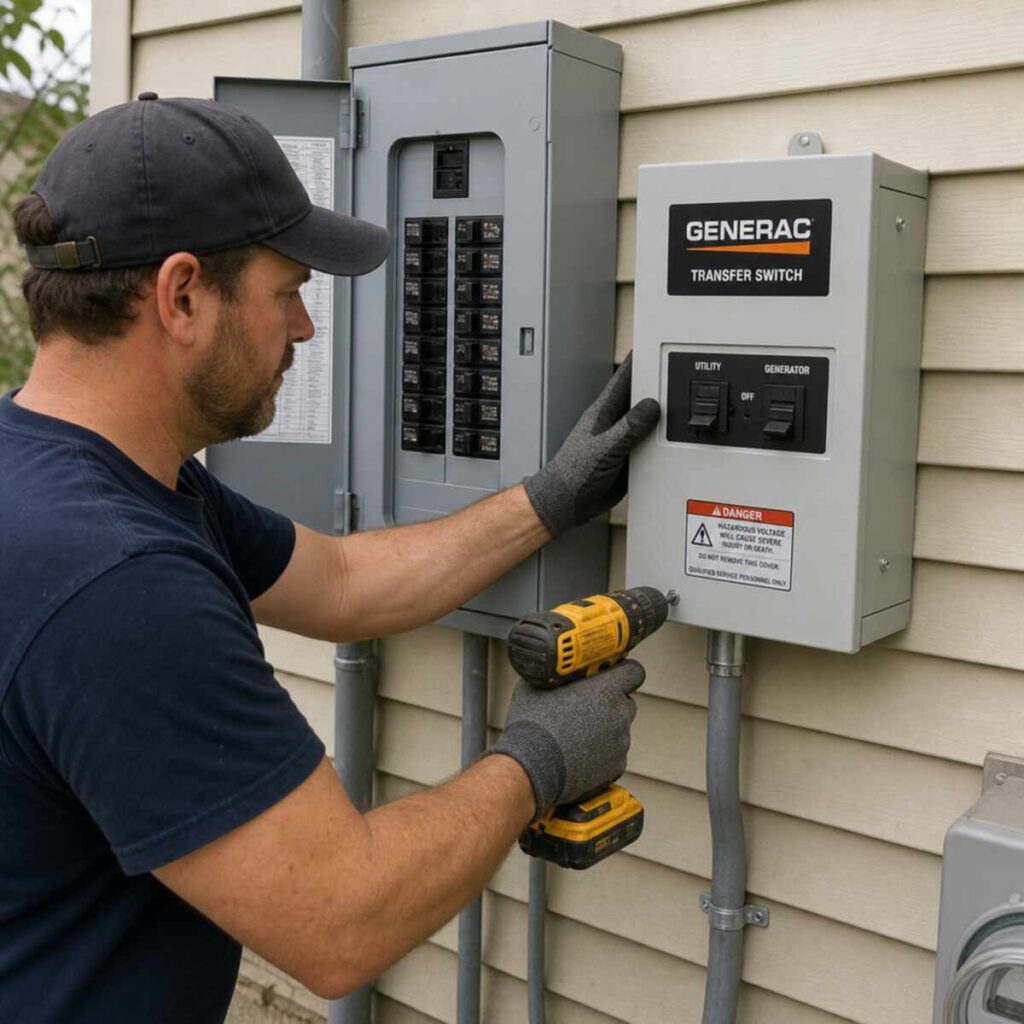
Automatic Transfer Switch
A standby generator commonly uses an automatic transfer switch. When utility power fails, the system detects the outage, starts the generator, transfers the load, and later returns to utility power when service is restored.
Benefits:
- Automatic operation
- Excellent convenience
- Useful for travel, medical needs, or frequent outages
- Integrated with standby systems
Tradeoffs:
- Higher cost
- Professional installation required
- Load management may be needed for large appliances
The transfer switch is the gatekeeper. It decides what power source feeds the home and helps keep generator power from going where it should not.
Carbon Monoxide Safety: Non-Negotiable
Carbon monoxide is colorless, odorless, and deadly. Every fuel-burning generator produces exhaust. That includes gasoline, propane, diesel, and natural gas units.
Never Run a Fuel-Burning Generator In These Places
- Inside a home
- Inside a garage
- In a basement
- In a shed
- On a porch
- On a balcony
- In a crawlspace
- Near open windows or doors
- Near vents or air intakes
Opening a garage door is not enough. Exhaust can drift, collect, and enter living spaces.
Safe Placement Principles
Follow the manufacturer’s manual and local rules, but the general goal is simple: keep exhaust far from people and buildings.
Place the generator:
- Outdoors only
- Away from doors, windows, vents, and air intakes
- With exhaust directed away from the home
- On a stable, dry surface
- Protected from rain according to manufacturer-approved methods
- Away from combustible materials
Carbon Monoxide Alarms
Every home using an emergency generator should have working carbon monoxide alarms. Place them according to the alarm manufacturer’s instructions and applicable safety guidance. Test them regularly and replace them when they reach end of life.
Do not treat alarms as permission to place a generator too close. Alarms are the last warning, not the first line of defense.
Backfeeding: The Mistake That Can Kill
Backfeeding happens when generator power flows into wiring in an unsafe way, especially through a wall outlet or improper connection. It can energize utility lines that workers believe are de-energized.
Never use a homemade cord with two male plug ends. Never connect a generator to a dryer outlet unless a code-compliant transfer setup has been specifically designed and installed for that purpose. Never improvise with electrical connections during an outage.
Safe generator power requires separation between utility power and generator power. That is the purpose of a transfer switch, interlock, or approved standby system.
If you remember only one electrical rule, remember this:
Do not connect a generator to your home’s wiring unless a qualified person has installed approved transfer equipment.
Noise: The Forgotten Factor
A generator that looks perfect on paper can become unbearable at 2 a.m.
Noise matters for:
- Your comfort
- Your neighbors
- Campgrounds
- Apartments and shared spaces
- Local ordinances
- Homeowner association rules
- Long overnight runtimes
What Affects Generator Noise?
Generator noise depends on:
- Engine size
- Load level
- Inverter vs conventional design
- Enclosure design
- Distance from listeners
- Surfaces that reflect sound
- Maintenance condition
Inverter generators are often quieter, especially at partial load, because they can vary engine speed. Conventional generators may run at a steadier speed regardless of load.
How to Reduce Noise Safely
You can reduce generator noise by:
- Buying a quieter model from the start
- Placing the generator farther away while maintaining safe cord sizing
- Pointing the exhaust away from people and structures
- Using manufacturer-approved covers or enclosures only
- Keeping the engine maintained
- Avoiding unnecessary loads
Never build a tight box around a generator unless it is specifically engineered for ventilation, cooling, fire safety, and exhaust management. A generator needs air to breathe and space to shed heat.
Runtime: How Long Will It Actually Run?
Runtime is one of the most misunderstood generator specs.
A manufacturer might state that a generator runs a certain number of hours on a tank at a partial load. That does not mean it will run that long while powering every appliance you own.
Runtime Depends On
- Fuel tank size
- Load level
- Engine efficiency
- Fuel type
- Outside temperature
- Maintenance condition
- Generator design
The heavier the load, the more fuel you burn. A generator powering a refrigerator and a few lights may run far longer than the same generator running pumps, heaters, and kitchen appliances.
Plan Runtime Around Real Life
Ask practical questions:
- Can the generator run overnight safely without refueling?
- How much fuel can you store safely and legally?
- Can you lift and pour fuel cans safely?
- Do you need power continuously or only in cycles?
- Can refrigerators and freezers be powered periodically instead of nonstop?
- How will you refuel during an extended regional outage?
Refueling is not just inconvenient. It can be dangerous if done carelessly. Turn the generator off and let it cool before refueling according to the manufacturer’s instructions.
Maintenance: The Generator That Starts Is the Generator You Maintained
An emergency generator spends most of its life waiting. That is exactly why maintenance matters.
A machine that sits neglected may fail when you need it most.
Portable Generator Maintenance Checklist
Before storm season:
- Read the manual
- Check oil level and oil condition
- Inspect air filter
- Inspect spark plug if applicable
- Check fuel lines and connections
- Start and run the generator under a small load
- Confirm extension cords are in good condition
- Test transfer switch or interlock procedure if installed
- Confirm carbon monoxide alarms work
- Check that fuel is fresh and stored safely
After each use:
- Let the generator cool
- Check for leaks or damage
- Refill or change oil as required
- Clean debris from vents
- Record run hours
- Store according to the manual
Periodically:
- Change oil at recommended intervals
- Replace air filters as needed
- Service spark plugs as needed
- Keep battery charged if electric start is included
- Run the generator occasionally as recommended
- Inspect cords, plugs, and inlet connections
Standby Generator Maintenance Checklist
For standby systems:
- Follow the manufacturer’s maintenance schedule
- Keep service access clear
- Check for error messages or alerts
- Ensure exercise cycles occur as configured
- Inspect for debris, snow, leaves, or pests
- Schedule professional service as needed
- Confirm the transfer switch operates properly
- Keep records of maintenance and repairs
A standby generator may start automatically, but it does not maintain itself magically. Treat it as critical home equipment.
Storage: Fuel, Cords, and Common Sense
Storage is where good generator plans are either preserved or ruined.
Gasoline Storage
If you store gasoline:
- Use approved fuel containers
- Store in a safe, ventilated location away from ignition sources
- Use fuel stabilizer if recommended
- Rotate fuel regularly
- Label containers with purchase dates
- Follow local limits and fire safety rules
Old gasoline is a common cause of generator trouble. If you choose a gasoline-powered portable generator, fuel rotation becomes part of ownership.
Propane Storage
If you store propane:
- Keep cylinders upright
- Store outdoors or as directed by safety rules
- Protect valves
- Inspect cylinders for damage or expiration requirements
- Keep away from heat and ignition sources
- Make sure you have the correct hoses and regulators
Propane’s long storage life makes it attractive, but cylinders still require safe handling.
Battery Storage
If you use a battery power station:
- Store it within the recommended temperature range
- Keep it charged according to manufacturer guidance
- Avoid leaving it fully depleted
- Inspect cables and ports
- Test it periodically with expected loads
- Store solar cables and adapters together
A battery system can be wonderfully simple, but only if it is charged when the outage begins.
Cord and Accessory Storage
Keep generator accessories together:
- Extension cords
- Generator inlet cord
- Oil
- Funnel
- Spark plug wrench
- Owner’s manual
- Flashlight or headlamp
- Work gloves
- Fuel stabilizer
- CO alarm batteries if applicable
- Laminated startup and shutdown instructions
During an outage, you do not want to search three closets and a garage shelf for the one cord that makes the whole plan work.
Budgeting: What You Are Really Paying For
A generator budget is not just the sticker price of the unit.
Plan for the full system.
Portable Generator Budget Items
Consider costs for:
- Generator purchase
- Heavy-duty outdoor-rated extension cords
- Generator inlet box if connecting to home circuits
- Manual transfer switch or interlock kit
- Electrician labor
- Fuel containers
- Fuel stabilizer
- Oil and maintenance supplies
- Weather-rated operating cover if approved by the manufacturer
- Carbon monoxide alarms
- Security cable or lock
- Storage space or shed considerations
A bargain generator may not be a bargain if you cannot connect it safely or maintain it properly.
Standby Generator Budget Items
Consider costs for:
- Generator unit
- Automatic transfer switch
- Electrical installation
- Gas or propane connection
- Pad or mounting base
- Permits and inspections
- Load management modules if needed
- Maintenance agreement
- Repairs over time
- Landscaping or clearance adjustments
Standby systems are more expensive because they are not just machines. They are installed infrastructure.
Battery System Budget Items
Consider costs for:
- Battery power station
- Extra battery modules if available
- Solar panels
- Solar cables and adapters
- Indoor storage area
- UPS units for sensitive electronics
- Replacement battery expectations over the long term
Battery systems can look pricey per watt, but they offer silent, indoor-safe operation that fuel generators cannot provide.
Compliance, Permits, and Rules in the United States
Generator rules vary by state, city, county, utility, building type, and homeowner association. This guide is general, not a substitute for local code advice.
That said, several common compliance themes apply across much of the United States.
Electrical Codes and Safe Installation
Any generator connection to a home electrical panel should comply with applicable electrical codes and be installed by a qualified electrician. Transfer switches, interlock kits, inlets, breakers, conductors, and grounding arrangements must be appropriate for the equipment and location.
Do not assume a product is allowed just because it is sold online. Compatibility with your panel, local inspection standards, and utility requirements matter.
Permits
You may need permits for:
- Standby generator installation
- Transfer switch installation
- Electrical panel work
- Natural gas piping
- Propane tank installation
- Concrete pad or site work in some jurisdictions
Portable generator use with extension cords may not require the same permits, but any permanent wiring usually brings code requirements.
Homeowner Associations and Local Ordinances
Some communities regulate:
- Generator placement
- Noise levels
- Screening or visibility
- Fuel tank location
- Operating hours for non-emergency use
- Setbacks from property lines
Check before installation, not after the concrete pad is poured.
Apartments and Condos
Multi-family buildings often have strict rules against fuel storage and generator use on balconies, patios, hallways, and shared spaces. These rules exist for good reasons: fire, exhaust, and carbon monoxide risk.
For apartment dwellers, battery systems and building-level preparedness plans are usually safer and more realistic than fuel-burning generators.
Emissions and Air Quality Rules
Some areas have additional emissions or air-quality restrictions, especially for larger engines or frequent operation. California and certain local jurisdictions may have rules that differ from other regions. If emissions compliance matters in your area, confirm before buying.
Utility Coordination
Standby systems and panel-connected portable systems may need to meet utility requirements to protect workers and equipment. Proper transfer equipment is central to this.
When in doubt, ask your local building department, utility, licensed electrician, or qualified generator installer.
Emergency Preparedness Beyond the Generator
A generator helps, but it is not the entire plan.
During a power outage, the goal is not only electricity. The goal is safety, communication, food, water, warmth, medical continuity, and calm.
Build an Outage Kit
Include:
- Flashlights and headlamps
- Extra batteries
- Battery banks
- Weather radio
- First-aid kit
- Bottled water or stored water
- Nonperishable food
- Manual can opener
- Medications
- Copies of important documents
- Cash in small bills
- Warm layers or cooling supplies depending on season
- Pet supplies
- Baby supplies if needed
- Sanitation supplies
Protect Food
During an outage:
- Keep refrigerator and freezer doors closed as much as possible
- Use appliance thermometers if available
- Group frozen items together
- Plan generator cycles if not running continuously
- Know when food is no longer safe and avoid taking risks
A generator can help preserve food, but judgment still matters.
Plan for Medical Needs
If anyone in your household relies on powered medical equipment:
- Talk with healthcare providers about backup power needs
- Know wattage and runtime requirements
- Keep batteries charged
- Consider redundant backup options
- Notify your utility if they offer medical baseline or priority programs
- Have an evacuation plan if backup power fails
Do not rely on a single machine without a backup plan for critical medical needs.
Communication Plan
Set up:
- Charged phones
- Battery packs
- Emergency contact list on paper
- Local radio source
- Family meeting point
- Out-of-area contact person
- Car charger
- Backup internet plan if needed
In many outages, information becomes as valuable as electricity.
Weather and Seasonal Planning
Your generator plan should match your climate.
For winter:
- Prioritize heat-related systems
- Protect pipes from freezing
- Store fuel safely in cold conditions
- Keep snow away from generator exhaust and intake areas
For summer:
- Prioritize refrigeration
- Plan cooling areas
- Use fans efficiently
- Know whether your generator can start a window AC or selected HVAC equipment
- Watch heat risks for children, older adults, pets, and medically vulnerable people
For storm season:
- Test equipment early
- Fuel before the rush
- Secure outdoor objects
- Keep cords and instructions ready
- Charge battery systems in advance
Recommended Buying Checklist
Before purchasing an emergency generator, answer these questions.
Power Needs
- What are the top five items I must power?
- Do I need 120 volts only, or 120 and 240 volts?
- Do I need to power hardwired equipment?
- What is my estimated running wattage?
- What is my largest starting wattage?
- Can I rotate loads instead of running everything at once?
Fuel
- Which fuel can I store safely?
- Which fuel is available during local emergencies?
- How much fuel do I need for 24, 48, or 72 hours?
- Am I comfortable handling gasoline?
- Would propane storage be easier?
- Is natural gas available at my property?
Connection
- Will I use extension cords only?
- Do I need a manual transfer switch?
- Is an interlock appropriate and allowed locally?
- Do I need a standby generator with automatic transfer?
- Have I spoken with a qualified electrician?
Safety
- Where will the generator run outdoors?
- Is the location far from windows, doors, vents, and neighbors?
- Do I have working carbon monoxide alarms?
- Do I have weather protection that does not create a fire or exhaust hazard?
- Do I understand startup, shutdown, and refueling procedures?
Practical Use
- Can I move the generator safely?
- Can I start it in cold weather?
- Is electric start important?
- Is it too loud for my neighborhood or campground?
- Can I maintain it myself?
- Where will I store it?
Budget
- What is the total system cost?
- Have I included cords, transfer equipment, installation, fuel storage, and maintenance?
- Is the cheaper unit still safe and practical?
- Would a smaller generator plus better load management meet my needs?
Outage Day Operating Checklist
When the power goes out, follow a calm sequence.
Before Starting
- Confirm the outage is not caused by a hazard inside your home
- Turn off or unplug sensitive equipment if needed
- Move the generator outdoors to the planned location
- Check oil and fuel
- Inspect cords
- Confirm carbon monoxide alarms are working
- Keep children and pets away
- Make sure the generator is dry and stable
Starting
- Follow the manufacturer’s startup procedure
- Let the generator stabilize before adding loads
- Connect loads one at a time
- Start larger motor loads separately when possible
- Watch for overload indicators or unusual sounds
During Operation
- Keep the generator outdoors and away from openings
- Do not refuel while hot unless the manual specifically allows a safe procedure
- Monitor fuel level
- Manage loads intentionally
- Keep cords away from puddles and traffic paths
- Check on refrigerators, freezers, pumps, and medical equipment
Shutting Down
- Disconnect or turn off loads
- Let the generator run briefly with no load if recommended
- Shut it down according to the manual
- Let it cool before refueling or storing
- Record run hours for maintenance
Homeowner Scenarios
The Suburban Home With Occasional Storm Outages
Likely priorities:
- Refrigerator
- Freezer
- Lights
- Wi-Fi
- Phone charging
- Sump pump
- Furnace blower in winter
Good fit:
- Mid-size or larger portable generator
- Manual transfer switch or interlock
- Gasoline, propane, or dual-fuel model
Why it works:
You can keep essentials going without paying for whole-home standby power. With a transfer setup, you can safely power selected circuits and avoid cords running everywhere.
The Rural Home With a Well Pump
Likely priorities:
- Well pump
- Refrigerator and freezer
- Heat system
- Sump pump
- Lights
- Communications
Good fit:
- Larger portable generator with 240-volt capability if required
- Standby generator if outages are frequent
- Professional sizing for pump starting loads
Why it works:
Water changes the equation. If your well pump is essential, make it central to the sizing conversation.
The Home With Medical Equipment
Likely priorities:
- Medical device power
- Battery backup
- Climate control if medically necessary
- Communication
- Lighting
Good fit:
- Battery backup for immediate transition
- Generator sized for extended support
- Standby system if automatic backup is necessary
- Written emergency plan
Why it works:
Medical continuity requires redundancy. A generator that takes 20 minutes to set up may not be enough by itself.
Apartment and Condo Guidance
If you live in an apartment, your safest generator is usually not a fuel-burning generator at all.
Balconies are not safe generator locations. Exhaust can enter your unit, neighboring units, or shared ventilation pathways. Fuel storage may also violate lease terms, fire codes, or building policies.
Better Apartment Options
Consider:
- Battery power station
- UPS for modem, router, and computer
- Rechargeable lanterns
- Power banks
- Small solar panel where allowed
- Cooler and ice plan
- Building emergency communication plan
Apartment Preparedness Priorities
Focus on:
- Lighting
- Phone charging
- Medical needs
- Food safety
- Heat or cooling alternatives
- Water storage if pumps may fail
- Communication with property management
Ask your building manager:
- Does the building have backup power for elevators?
- Are emergency lights maintained?
- What happens to water pressure during outages?
- Are garage doors or access gates backed up?
- Are residents allowed to use battery systems?
- What is the evacuation plan?
Apartment preparedness is less about powering everything and more about staying safe, informed, and mobile.
RV Generator Guidance
RVs bring their own power puzzle. You may need electricity for lights, battery charging, refrigerator controls, water pump, outlets, microwave, and air conditioning.
Key RV Questions
Ask:
- Do I need to run one air conditioner or more than one?
- What is the starting load of the AC unit?
- Do I have a soft-start device installed?
- What are campground noise limits?
- Will I use gasoline, propane, diesel, or solar battery support?
- Where will exhaust go?
- Do I have working carbon monoxide alarms inside the RV?
Inverter Generators for RVs
Inverter generators are popular for RV use because they are quieter and produce stable power. Many RV owners choose models that balance air conditioner startup needs with campground friendliness.
Built-In RV Generators
Some RVs have built-in generators connected to the vehicle or onboard fuel supply. These are convenient, but they still require maintenance, exercise, oil changes, and exhaust awareness.
Solar and Battery Pairing
Solar and battery systems can reduce generator runtime. They are especially useful for lights, fans, device charging, and refrigerator electronics. Air conditioning remains a much larger load and requires careful system design.
How to Avoid Overspending
Generator shopping can tempt you into buying the biggest unit you can afford. Bigger feels safer. Sometimes it is. Often, it is just heavier and thirstier.
Buy Enough, Not Absurdly More
Oversized generators can mean:
- More fuel use
- More noise
- More difficult storage
- Harder transport
- Higher maintenance costs
- More expensive electrical equipment
Instead, build a load plan. Decide which appliances can run together and which can be rotated.
Invest in Connection and Safety
A smaller generator with a proper transfer setup may serve you better than a larger unit used through a tangle of undersized cords.
Spend money on:
- Correct connection equipment
- Carbon monoxide alarms
- Quality cords
- Fuel storage
- Maintenance supplies
- Professional installation where needed
Consider the Cost of Failure
If your basement floods when the sump pump loses power, generator cost looks different. If you work from home and outages cost you income, backup power may be a business continuity tool. If you have refrigerated medication, reliable backup may be essential.
The right budget reflects the consequences of losing power, not just the price of the generator.
Common Mistakes to Avoid
Mistake One: Buying During the Panic
When a storm is already coming, inventory shrinks and judgment gets rushed. Buy and test your equipment before the season.
Mistake Two: Ignoring Starting Watts
A generator may appear large enough until a pump or compressor tries to start. Always plan for surge.
Mistake Three: Using Indoor or Balcony Placement
Fuel-burning generators belong outdoors, away from openings. No exceptions for rain, convenience, theft concerns, or “just for a few minutes.”
Mistake Four: Backfeeding Through an Outlet
Improvised connections are dangerous. Use a transfer switch, interlock, or direct cord connection to appliances.
Mistake Five: Forgetting Maintenance
A generator is not ready just because it is in the garage. Test it, service it, and store it properly.
Mistake Six: Underestimating Fuel
A generator without fuel is a very heavy decoration. Plan fuel storage, rotation, and resupply.
Mistake Seven: Running Too Much at Once
Load management is a skill. Turn on one major load at a time and avoid stacking high-wattage appliances unnecessarily.
Mistake Eight: Ignoring Noise
A loud generator can strain neighbor relationships and violate rules. Check noise expectations before buying.
A Simple Load Management Strategy
You do not have to run everything continuously.
Try this rhythm during a prolonged outage:
- Keep refrigerator and freezer closed as much as possible
- Run the generator to cool appliances, charge devices, and pump water
- Turn off unnecessary loads before starting large appliances
- Use battery banks between generator sessions
- Run high-wattage kitchen appliances one at a time
- Prioritize sump pump or well pump when weather demands it
- Save fuel overnight if safe temperatures and food conditions allow
This approach can stretch fuel, reduce noise, and allow a smaller generator to do meaningful work.
Final Selection Framework
If you are still unsure, use this plain-language framework.
Choose a Battery Power Station If
- You live in an apartment or condo
- You mainly need electronics, lights, and small devices
- You need indoor-safe power
- Noise must be minimal
- Your outages are short
- You can recharge from wall power, vehicle power, or solar
Choose a Small Inverter Generator If
- You want quiet portable power
- You camp or travel
- You need to charge devices and run small appliances
- You value fuel efficiency
- You do not need major household circuits
Choose a Mid-Size Portable Generator If
- You want basic home backup
- You need refrigerator, freezer, lights, and some outlets
- You can manage loads manually
- You are comfortable storing fuel
- You want a practical balance of cost and capability
Choose a Large Portable Generator If
- You need pumps, furnace blower, or multiple circuits
- You may need 240-volt power
- You have a transfer switch or interlock installed
- You can handle the weight, noise, and fuel use
Choose a Standby Generator If
- You want automatic backup
- Outages are frequent or long
- You have medical, accessibility, or remote-work needs
- You want to power many household systems
- You are ready for professional installation and higher cost
Frequently Asked Questions
What size emergency generator do I need for a house?
It depends on what you want to power. A home that only needs a refrigerator, freezer, lights, and chargers may need far less capacity than a home with a well pump, sump pump, furnace blower, or central air conditioning. Add the running watts of the items you want to use at the same time, then account for the largest starting surge. For hardwired systems or 240-volt loads, consult a qualified electrician or generator installer.
Can a portable generator power my whole house?
Some large portable generators can power many household circuits through a properly installed transfer switch or interlock, but “whole house” can mean very different things. Central air, electric heat, electric water heating, ranges, dryers, and pumps can add large loads quickly. Many homeowners use a portable generator for selected essentials rather than every circuit.
Is an inverter generator better than a regular generator?
It depends on your priorities. Inverter generators are usually quieter, more fuel-efficient at lighter loads, and better suited for sensitive electronics. Conventional generators often provide more wattage for the money and can be practical for larger emergency loads. If quiet operation and electronics matter, consider an inverter. If maximum power at lower cost matters, a conventional model may fit.
Can I run a generator in the rain?
Generators should not be operated in unsafe wet conditions unless protected by manufacturer-approved equipment that allows proper ventilation and exhaust clearance. Never place a running generator in a garage, shed, porch, or enclosed space to keep it dry. Use only safe, approved weather protection and follow the manual.
How far should a generator be from the house?
Follow the manufacturer’s instructions and local safety guidance. The key principle is that exhaust must be kept away from doors, windows, vents, crawlspaces, and air intakes. More distance is generally safer when cords and voltage drop are properly managed. Always use working carbon monoxide alarms indoors.
Can I plug my generator into a wall outlet?
No. Plugging a generator into a wall outlet is dangerous backfeeding. It can energize utility lines, injure workers, damage equipment, and create fire hazards. Use heavy-duty cords directly to appliances or have a qualified electrician install a transfer switch or interlock.
What is the best generator for an apartment?
For most apartments, the best option is a battery power station, not a fuel-burning generator. Gasoline, propane, diesel, and natural gas generators create carbon monoxide and fire risks and generally should not be used on balconies, indoors, in hallways, or near windows. Pair a battery system with power banks, rechargeable lights, and a building emergency plan.
What generator is best for an RV?
Many RV owners prefer inverter generators because they are quieter and provide stable power. Size depends heavily on whether you need to run air conditioning. Check your RV’s electrical requirements, campground noise rules, and carbon monoxide safety needs. Solar and battery systems can reduce generator runtime but may not replace a generator for air conditioning without a larger investment.
How much fuel should I store?
That depends on your generator’s fuel use, expected load, outage duration, storage space, and local safety rules. Plan around realistic operation, not best-case runtime claims. Many households plan for at least a short emergency window and rotate fuel as needed. Store fuel only in approved containers and locations.
Do I need a transfer switch?
If you want to power household circuits through your electrical panel, you need approved transfer equipment such as a transfer switch or appropriate interlock installed according to code. If you only plug appliances directly into a portable generator with proper cords, a transfer switch may not be necessary. Hardwired equipment generally requires a proper transfer solution.
Is propane better than gasoline for emergency use?
Propane stores well and is popular for emergency readiness. Gasoline often provides strong output and is widely available in normal conditions, but it degrades in storage and can be difficult to obtain during widespread outages. A dual-fuel generator can offer flexibility.
Are battery “solar generators” enough for a power outage?
They can be, depending on your needs. Battery systems are excellent for phones, lights, laptops, routers, small medical devices, and short outages. Larger systems can run more demanding loads, but capacity and recharge time matter. For pumps, large appliances, or multi-day whole-home backup, fuel-powered or professionally designed battery systems may be needed.
The Bottom Line
The right generator is not the biggest one on the shelf. It is the one matched to your real loads, your fuel reality, your safety plan, and your willingness to maintain it.
If you want simple resilience, start with essentials: refrigeration, communication, lighting, medical needs, water, and heat or cooling priorities. Then size your system around running watts and surge watts. Choose fuel you can store or access safely. Decide whether portability or automatic standby power matters more. Install transfer equipment if you want to power household circuits. Respect carbon monoxide and backfeeding risks every single time.
A power outage is stressful enough. Your backup plan should not be another emergency.
Choose thoughtfully, test before you need it, and keep your household ready for the moment the grid goes quiet.
