


If you’ve spent any time exploring the world of online gambling, you have likely stumbled across the term “casinos without CRUKS.” It sounds technical, but the idea behind it is straightforward. What does this term actually mean for you and the safety of your money? What do you consider about casinos zonder cruks.
Understanding these sites begins with CRUKS, the official Dutch self-exclusion register. This national safety net is designed to help people control their gambling. Once a person registers with CRUKS, all legal Dutch casinos—both online and physical—are required by law to block them from playing.
Therefore, a “casino without CRUKS” is simply an online casino that is not licensed in the Netherlands and, as a result, isn’t connected to this mandatory safety system. The core difference isn’t just about game selection or bonuses. It’s about the legal protection and player safety standards that a Dutch license guarantees.
This online casino guide provides a clear and honest look at this topic, exploring the real-world risks involved—from unresolved payment disputes to a lack of responsible gaming tools—so you can understand precisely what you’re giving up when stepping outside the regulated system.
What is CRUKS? Your Personal ‘Do Not Serve’ List for Gambling
Sometimes, it’s wise to take a complete break from gambling. To help people do this effectively, the Netherlands created a powerful tool called CRUKS. The name is an acronym for Centraal Register Uitsluiting Kansspelen, but what it does is much simpler than its name suggests. It’s the country’s official system for people who want to pause all their gambling activities.
Think of CRUKS as a national “do not serve” list for gambling, but one you voluntarily put yourself on. Once you complete the CRUKS registration, every single legal casino, slot machine arcade, and betting website in the Netherlands is legally required to deny you access. It’s a comprehensive “gambling stop” that covers the entire regulated Dutch market, giving you a total break.
This self-exclusion isn’t just a suggestion; it’s a mandatory timeout. When you sign up, you become one of the self-excluded players who are blocked for a minimum of six months. You can choose a longer period if you wish, but you cannot cancel the registration before those first six months are over. This design ensures the break is meaningful and gives you real space away from gambling.
CRUKS is a consumer protection measure built into Dutch law. It’s a safety net designed to give players more control and prevent potential harm. The fact that it’s mandatory for all licensed providers is a key feature of the legal Dutch gambling market, which brings up an important question: what about the casinos that operate outside this system?
So, What Exactly Is a “Casino Without CRUKS”?
A “casino without CRUKS” is any gambling website that does not hold an official license from the Netherlands. To operate legally here, an online casino must be approved by the Kansspelautoriteit (KSA), which is the official Dutch Gaming Authority. It is this mandatory license that legally requires a casino to connect to the CRUKS system and enforce the national self-exclusion rules.
These gambling sites are typically based in other countries and operate under foreign licenses—or in some cases, with no reliable license at all. Because they aren’t supervised by the KSA, they have no legal obligation or technical connection to the Dutch self-exclusion register. This is precisely why they are sometimes marketed as alternatives for self-excluded players, as they are not designed to recognize or enforce a CRUKS block.
The most important thing to understand is that by playing at new casinos without CRUKS, you are stepping outside the entire system of Dutch consumer protection. The safety net provided by the KSA—which helps resolve disputes, ensures fair play, and enforces responsible gambling tools—does not apply. This immediately shifts all the risk onto you as the player and raises another critical question: is it even legal to gamble on these sites?
The Critical Question: Is Gambling Without a Dutch License Legal?
This leads to a common and understandable question: is gambling without a Dutch license legal for you, the player? The answer lies in distinguishing between the casino and the customer. Under the Dutch Remote Gambling Act (Wet Koa), it is strictly illegal for any online casino to actively target players in the Netherlands without first securing a valid KSA license. The law is designed to regulate the market by holding the operators, not the players, accountable for offering these services.
While the act of offering games without a license is illegal, the enforcement focus of the Dutch Gaming Authority (KSA) isn’t on chasing individual players. Instead, their power is directed at the companies running these websites. The KSA’s primary mission is to protect consumers by fining and blocking these illegal operators, effectively trying to shut their businesses down within the Netherlands. As a player, you are not their target.
The most important takeaway isn’t about legal penalties, but about practical safety. The true risks of casinos without a KSA license stem from this lack of regulation. Because these sites operate outside of Dutch law, you have no official authority to turn to when things go wrong. This leaves you completely exposed if a dispute arises, raising the most critical question of all: what happens when a casino refuses to pay your winnings?
Risk #1: What Happens When a Casino Refuses to Pay Your Winnings?
Imagine you’ve won a significant amount—a few hundred or even thousands of euros. At safe online casinos with a Dutch license, the process for getting your money is straightforward. But what if there’s a problem and the casino refuses to pay? This is where the protection of a KSA license truly matters. For licensed casinos, there is a clear, official path you can follow if you believe your winnings are being unfairly withheld.
When you play at a site regulated by the Dutch Gaming Authority (KSA), you have a powerful safety net. If a payment dispute can’t be resolved with the casino’s customer service, you aren’t left on your own. The process is designed to protect you:
- Contact the casino: First, you try to resolve the issue directly through their official complaints procedure.
- Submit a formal complaint: If that fails, you can escalate it. Licensed casinos are required to have a formal process for this.
- File a report with the KSA: As a last resort, you can report the issue to the KSA, which acts as the ultimate referee and can investigate the operator.
Now, consider the same scenario at a casino without a KSA license. You win, but the withdrawal is denied. You contact customer service, and they give you the runaround or stop responding entirely. In this situation, there is no Dutch authority to turn to for help. Your only option is to try and appeal to a foreign regulator—if one even exists and is willing to listen—which is often a difficult and fruitless process. Your money is only as safe as the unlicensed casino’s willingness to pay you. This is one of the biggest risks of casinos without a KSA license: your financial security is gone.
Risk #2: The Illusion of Control Without a Unified Gambling Stop
Beyond winning or losing money, a crucial aspect of safe gambling is having the power to stop when you need to. If you ever feel your habits are getting out of hand, CRUKS offers a single, powerful “stop button.” By registering, you are instantly blocked from every single legal gambling provider in the Netherlands. It’s a one-time action that provides a comprehensive and mandatory break, giving you the space you need without any loopholes.
This robust safety net simply doesn’t exist when you play at casinos without a Dutch license. While many of these sites offer their own “self-exclusion” tools, they only apply to that one specific website. If you’re playing at five different non-CRUKS casinos, you would have to navigate five different processes and contact five different customer support teams to block yourself. It’s a time-consuming and often frustrating task that puts the entire burden of enforcement back on you.
The real danger here is the illusion of control. Even if you successfully block yourself from a few sites, thousands of others are just a search away. This makes it incredibly easy for someone looking to play at a casino despite CRUKS registration to find an alternative, completely defeating the purpose of taking a break in the first place. What should be a simple decision to pause becomes a continuous and exhausting test of willpower against endless temptation.
The lack of a central register like CRUKS means you give up the most effective tool for responsible gaming outside the Netherlands. You are left alone to manage your limits in an environment designed to keep you playing. But your financial and personal control aren’t the only things at stake. This brings us to another critical question: when there’s no Dutch authority watching, who guarantees the games are fair and your personal data is safe?
Risk #3: Who Guarantees the Games Are Fair and Your Data Is Safe?
Beyond financial control, there’s a fundamental question of trust: is the game you’re playing even fair? With a KSA license, the answer is a required “yes.” The Dutch Gaming Authority mandates that every game, from slot machines to digital blackjack, is powered by a tested Random Number Generator (RNG). Think of this as a digital engine that ensures every outcome is completely random, like a perfectly shuffled deck of cards. Independent auditors regularly check this technology to guarantee it hasn’t been tampered with. This verification is a core part of the Dutch license, but it’s a promise you can’t always count on at casinos operating outside this system.
Just as important as the fairness of the games is the safety of your personal information. To get verified in the Netherlands, you must provide an online casino with your ID and payment details. Handing over this sensitive data to a site with a KSA license means they are legally bound by strict Dutch and EU data protection laws (GDPR). This provides a powerful legal shield against your data being misused or sold. While there are some safe foreign online casinos, others may operate from jurisdictions with far weaker privacy laws, increasing your risk.
You are not just choosing a casino with fewer responsible gaming tools; you’re potentially playing unverified games on a platform that may not secure your data to the same standard. This raises the critical question: can I trust a casino without that official Dutch stamp of approval? The KSA provides a verified safety net for both fairness and data, while foreign sites can be a complete unknown. So, with all these significant downsides, what is the allure? Why do some players actively seek out these casinos despite the clear trade-offs?
The Allure vs. The Reality: Why Do Players Search for These Casinos?
Given the clear safety net provided by Dutch-licensed casinos, the appeal of those operating without CRUKS often comes down to a few tempting—but deceptive—promises. Players searching for new casinos without cruks are frequently met with ads for massive bonuses and fewer restrictions, creating an illusion of a more rewarding and “free” experience. However, these perceived benefits almost always hide significant downsides that can cost players far more in the long run.
The trade-offs are stark when you compare the surface-level attraction to the underlying risk.
| The Perceived Benefit | The Hidden Risk | | :— | :— | | Bigger Bonuses | Predatory “wagering requirements” that force you to bet your bonus 40x or more before you can cash out. There’s no regulator to help if the site refuses to pay your winnings. | | Credit Card Payments | Seems convenient, but it encourages gambling with borrowed money—a major red flag for developing a problem. Dutch sites block this for your protection. | | No CRUKS / Fewer Limits | This is the most dangerous “benefit.” A no limit online casino removes the most critical safety net that helps you stay in control or take a mandatory break when you need it most. |
What these sites market as freedom is really freedom from protection. The ability to use credit cards bypasses a crucial barrier against debt, and the massive bonuses are often designed to be nearly impossible to withdraw. But the most revealing “benefit” is avoiding CRUKS itself. For players who are specifically looking for a way around a self-imposed gambling stop, this isn’t a feature—it’s a serious cry for help.
A Sobering Look: Why “Bypassing a Gambling Stop” Is a Cry for Help
A quick internet search reveals a troubling trend: people looking for “how to bypass a gambling stop.” This search isn’t about finding a clever loophole; it’s a clear signal that control has been lost. When someone actively tries to play at a casino despite a CRUKS registration, they are attempting to dismantle a vital safety net they—or a concerned loved one—put in place for their own protection. It’s a moment where the urge to gamble begins to overpower the rational decision to stop.
This impulse is one of the most significant warning signs of problem gambling. The behavior is no longer about entertainment; it transforms into a compulsion that feels difficult to escape. Instead of seeking fun, the search becomes about finding any possible way to continue playing, even when a part of you knows it’s the wrong path. It is the very definition of losing control over your gambling habits.
For this reason, the genuine “alternatives for self-excluded players” are never other casinos. The correct and safest alternative is a support system. If this situation feels familiar, the next step isn’t another website, but a confidential conversation with an organization like Loket Kansspel. For those simply exploring the market, this highlights the risks of unregulated sites. Many operate under foreign licenses, but are all those protections the same?
Are All Foreign Licenses the Same? MGA vs. Curaçao Explained Simply
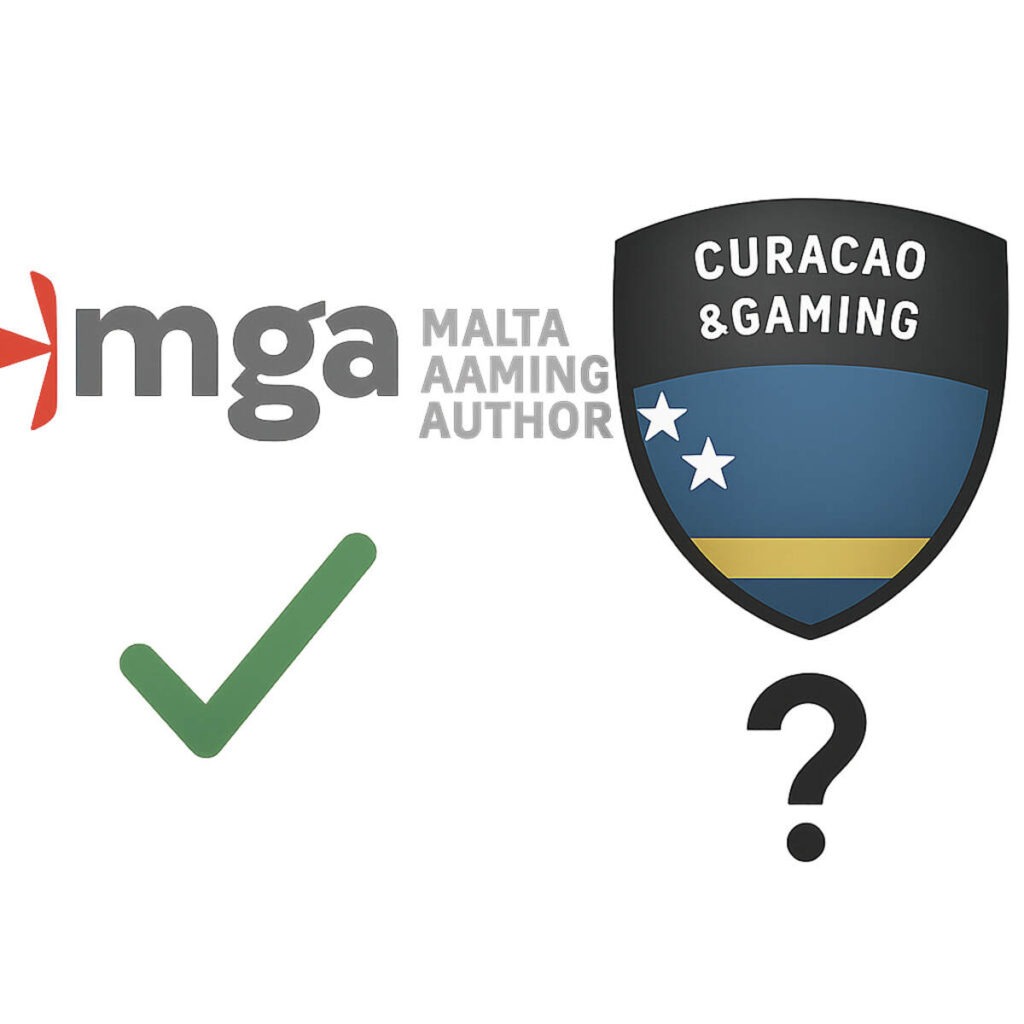
When you venture beyond Dutch-regulated sites, you’ll quickly notice that most casinos without CRUKS still display a license—just not from the Netherlands. This raises a logical question: if it has a license, isn’t it safe? The simple answer is no, because not all licenses are created equal. The two most common ones you’ll see are from the Malta Gaming Authority (MGA) and Curaçao, and they have very different reputations.
Among international regulators, a casino with a Malta Gaming Authority license is often seen as a sign of relative reliability. The MGA is known for having stricter rules and more rigorous checks on the casinos it oversees. Think of it as a quality seal that carries more weight in the online world; operators must meet higher standards for fairness and security to earn and keep this license.
Comparing the MGA license vs the Curaçao license reveals a significant gap. A license from Curaçao is generally considered much easier and cheaper for a casino to obtain. Because the barrier to entry is lower, it can sometimes attract operators who are less focused on player protection. While many legitimate casinos operate under this license, it is not the strong guarantee of safety that many players assume it to be. The question can I trust a casino with a Curacao license? doesn’t have a simple yes or no answer, which is a risk in itself.
For a player in the Netherlands, the distinction is almost academic. Even with a more reputable MGA license, if you have a dispute—like a casino refusing to pay out your winnings—your complaint goes to an authority in Malta, not the Dutch KSA. You lose the legal protection and local oversight guaranteed by a Dutch license. This is a critical risk to understand, especially when you see familiar payment methods that create a false sense of security.

The iDEAL Trap: Why This Familiar Logo Isn’t a Guarantee of Safety
Seeing the familiar red iDEAL logo can be reassuring. For many in the Netherlands, it’s the default way to pay online, and its presence can make an international casino feel instantly more trustworthy. This is a common and dangerous misconception. The ability to pay with iDEAL at an international casino site doesn’t mean the site is approved, legal, or safe for Dutch players. It’s simply a payment option, nothing more.
Think of it this way: iDEAL is like the cash register in a shop. It handles your transaction efficiently, but it has no way of knowing whether the products on the shelves are high-quality or even safe. The job of checking product safety belongs to a regulator, like the Food and Warenautoriteit (NVWA). In the gambling world, the KSA is the regulator, and iDEAL is just the payment processor. They are two completely separate things, and confusing them is a risk many unregulated casinos count on you taking.
This false sense of security can lure you into a trap. Players looking for what they think are the best international casino sites can easily mistake this payment convenience for a stamp of approval from the Dutch authorities. Relying on the iDEAL logo as your primary check for safe online casinos is one of the biggest mistakes you can make. So, if familiar logos aren’t the answer, what should you be looking for?
Finding Truly Safe Alternatives: What to Do if You Want to Play Responsibly
Instead of relying on payment logos, the search for genuinely safe online casinos comes down to one thing: an official license from the Dutch Gaming Authority (KSA). This KSA license is the only certification that guarantees a provider is legally operating in the Netherlands and is held to strict standards for fairness, security, and player protection. Think of it as the official government-issued seal of approval, a sign that the casino plays by Dutch rules and is accountable to a Dutch regulator.
To make finding these sites straightforward, the KSA maintains an official directory called the Kansspelwijzer. This online guide is a constantly updated list of every single company legally permitted to offer online gambling to players in the Netherlands. Forget a risky guide to playing at casinos abroad; this is your definitive resource for staying within the regulated system. Consulting this list removes all guesswork, confirming you are choosing a provider that is fully supervised and legitimate.
By selecting a casino from the Kansspelwijzer, you ensure you are protected. If you have a dispute over winnings, the KSA can intervene on your behalf. You are also guaranteed access to responsible gambling tools, including the CRUKS register, should you ever need it. The peace of mind this offers is the most valuable asset you can have. But even at a legal site, it’s wise to be prepared.
To help you stay safe no matter where you play, we’ve created a simple checklist of essential safety measures to take before you deposit any money.
Your 5-Point Safety Checklist Before Playing at ANY Online Casino
Before you sign up or deposit money at any site, running through a quick mental check can save you a world of trouble. While many websites claim to be the best casino alternatives, true safety isn’t about flashy promotions. Use this simple 5-point list to quickly spot safe online casinos and steer clear of the risky ones.
- Is it on the KSA’s Official List? Check the Kansspelwijzer. If the provider isn’t on this official list of Dutch licensees, stop. This is the single most important sign of a legal and protected site.
- Are Responsible Gambling Tools Obvious? Trustworthy sites make it easy to set deposit limits or take a break. If these tools are buried or hard to find, the casino’s commitment to your well-being is questionable.
- Is Customer Support Accessible? Can you easily find a live chat, email, or phone number? If you have to hunt for a way to get help with a problem, that’s a major red flag.
- Are the Terms in Clear Dutch? Legitimate Dutch sites provide their terms and conditions in clear, understandable language. Vague rules or poor translations can hide unfair clauses about your money.
- Does the Site Respect Your Limits? Does the casino pressure you with constant pop-ups to deposit more? A safe environment allows you to play at your own pace without aggressive sales tactics.
If a potential site fails even one of these checks—especially the first one—it’s a powerful signal to walk away. These aren’t just minor details; they are fundamental signs of whether a provider values your safety or just your money.
The Final Verdict: Is Gambling Without CRUKS Worth the Risk?
Before reading this, the term “casinos without CRUKS” was likely just a confusing phrase. Now, you can see past the marketing and recognize it for what it truly is: a clear dividing line between a protected environment and an unregulated one. You’ve transformed confusion into clarity, gaining the ability to accurately weigh the promises of these sites against their hidden costs.
The central question becomes simple: are the potential perks worth it? In exchange for things like different bonus offers, you are asked to trade away every meaningful safety net. This decision is the most important one you’ll make, and understanding the risks of casinos without a KSA license is the key to making it wisely.
When you step outside the regulated Dutch system, you surrender your fundamental rights as a player. There is no official authority to turn to if your winnings are withheld, no guarantee of fair play overseen by Dutch regulators, and no access to the powerful self-exclusion protection that CRUKS provides across all legal platforms. You are, in effect, on your own.
Choosing a casino with a Dutch license isn’t just about following rules; it’s about choosing protection, fairness, and control for yourself. The promise of safe gambling is only real when it’s backed by a system designed to defend it. Opting for a casino without CRUKS is a high-stakes gamble you make long before you ever place your first bet.