


We’ve all been there: It’s a sweltering summer day, and your t-shirt feels less like clothing and more like a heavy, wet blanket. You feel sticky, trapped, and uncomfortable. But what if, instead of trapping heat, your clothes actively helped your body stay cool? It’s not science fiction; it’s fabric science, and understanding one simple concept—breathability—can completely change how you dress for the heat. Find the best cooling fabric clothing.
Think of breathability as the difference between a screen door and a glass window. A truly breathable fabric acts like the screen, with an open weave that lets air flow through, carrying heat and moisture away from your skin. This is the secret to avoiding that stuffy, suffocating feeling. A non-breathable fabric, like the glass window, blocks that airflow and traps a layer of hot, humid air right against your body.
This simple fact explains why some thin fabrics can still feel surprisingly hot. In practice, a tightly woven synthetic shirt can block a cooling breeze just as effectively as a plastic bag. In contrast, the airy weave of natural cooling fabrics like linen lets that same breeze reach your skin. When searching for lightweight breathable shirts, the real test isn’t thickness—it’s whether air can actually pass through. This simple shift in thinking is the key to staying comfortable all summer long.
How Does Moisture-Wicking Fabric Actually Work?
You’ve probably noticed that your gym shirt feels drastically different from a regular cotton tee when you start to sweat. One feels light and dries quickly, while the other becomes a heavy, damp mess. This isn’t an accident; it’s the result of a technology called moisture-wicking, and it’s designed to work with your body’s natural cooling system.
The magic behind this is a two-step process that you can think of like a network of microscopic straws.
- It pulls sweat away. The fabric’s fibers are designed to lift moisture directly off your skin and pull it into the material.
- It spreads it out. Instead of holding that moisture in one spot, the fabric immediately disperses it across a wide surface area, exposing it to the air.
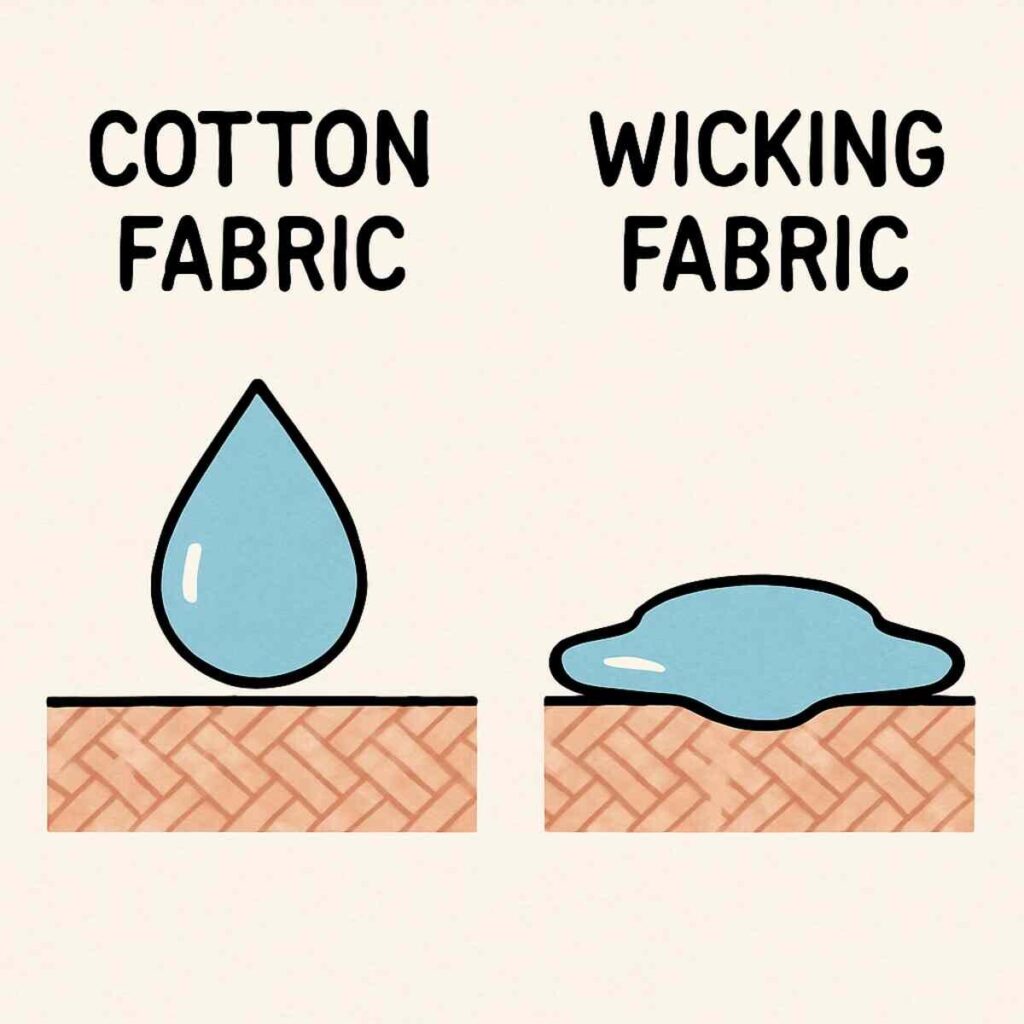
This is the key difference between a wicking fabric (like polyester or nylon) and an absorbent one (like cotton). Cotton acts like a sponge, soaking up sweat and holding it right against your skin, which blocks airflow and makes you feel clammy. A wicking fabric, on the other hand, wants to get rid of the moisture as fast as possible.
All this engineering has one simple goal: to speed up evaporation. When sweat evaporates from a surface, it creates a cooling sensation—it’s the same reason you feel a chill after getting out of a swimming pool. By spreading sweat out to dry instantly, moisture-wicking fabrics supercharge this natural process, helping you feel drier and cooler, even on the hottest days.
The Classic Showdown: Why Linen Beats Cotton in Hot Weather
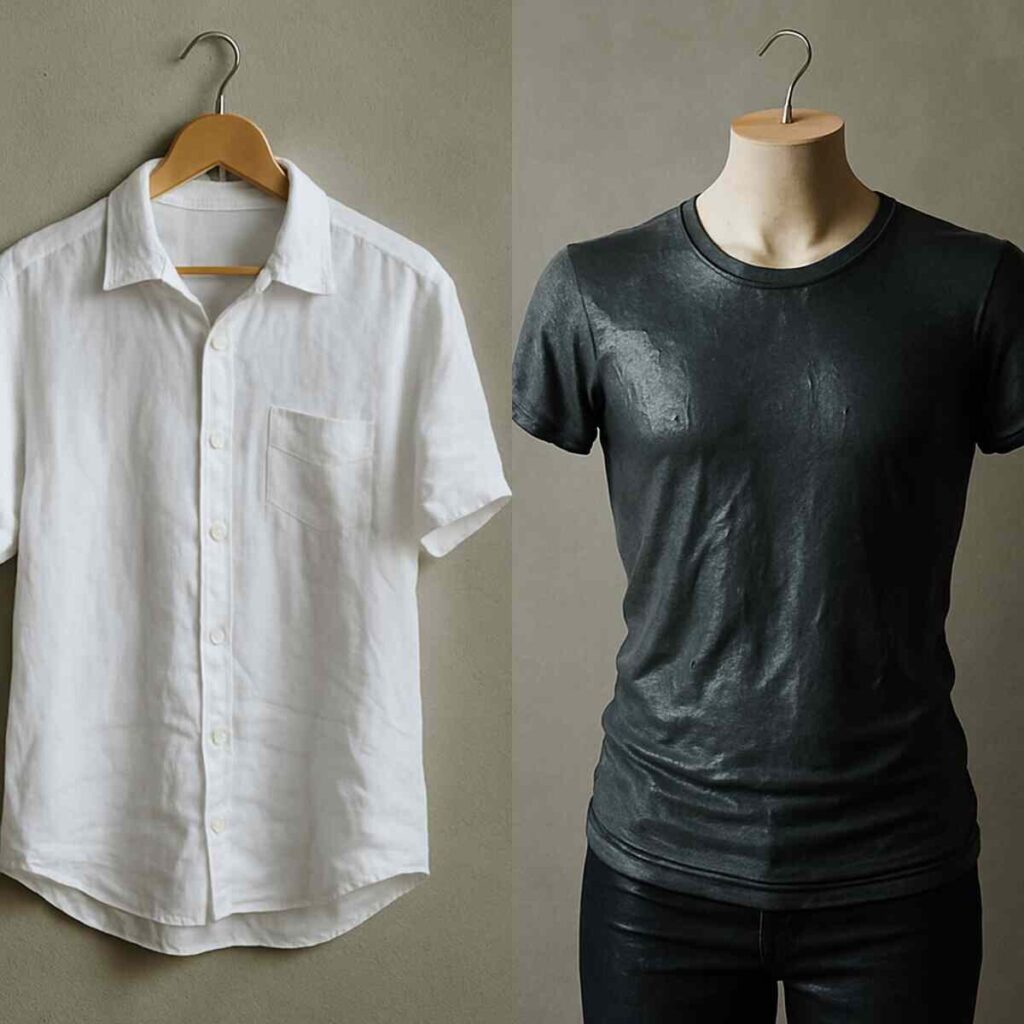
While modern wicking fabrics are fantastic for a workout, sometimes you want the comfort of a natural fiber. This brings us to a timeless summer debate: linen versus cotton. Though both are plant-based, their performance in the heat couldn’t be more different, and it all comes down to their structure. Linen’s secret is that its fibers are hollow and naturally stiff. This causes the fabric to stand away from your body, creating a small pocket of air that allows for constant circulation and prevents that awful, clingy feeling. It’s like wearing your own personal shade.
Cotton, on the other hand, has the opposite reaction to moisture. As we know, it’s a super-absorber. When you sweat into a cotton shirt, its soft fibers soak up the moisture and swell, completely closing off the fabric’s weave. In an instant, any breathability the shirt had is gone. It becomes heavy, sticks to your skin, and takes forever to dry, making you feel even hotter and clammier than before. This is why a damp cotton tee can feel so miserable in hot, humid weather.
So, when choosing between the two, think about the environment. For all-day comfort in sticky humidity, linen is the clear winner; its structure is simply better at managing heat and airflow. Save your favorite cotton pieces for those beautiful but dry summer days or cooler evenings when you won’t be sweating. But what if a fabric could do more than just let air pass through? Some materials are engineered to feel actively cool the moment they touch your skin, which is a whole different ballgame.
The “Cool-to-the-Touch” Secret: Unpacking Conductive Cooling Fabrics
Beyond just letting air flow, some fabrics play a more active role in making you feel cool. This is where conductive cooling comes in, a technology designed to pull heat directly away from your body. Think about touching a metal park bench on a cool day versus a wooden one. The metal feels significantly colder, even though both are the same temperature, because it’s better at conducting—or pulling—heat from your hand. Fabrics with this “thermoregulating clothing technology” work on the same principle, creating a noticeable cool-to-the-touch sensation the moment you put them on.
This impressive effect isn’t magic; it’s clever fiber engineering. Often, manufacturers will infuse nylon or polyester threads with microscopic, heat-absorbing minerals like crushed jade or titanium. These natural minerals are excellent conductors and work tirelessly to draw thermal energy away from your skin. Another method involves creating fibers that are flat and wide, like tiny ribbons, instead of round. This greater surface area allows the fabric to make more contact with your skin, enhancing its ability to transfer heat away and keep you feeling refreshed.
So, does this cooling technology in clothes work like personal air-conditioning? Not exactly. The cooling sensation is most powerful when you first put the garment on or when a breeze flows over the fabric, helping to carry away the heat it has absorbed. This makes it ideal for immediate relief on a hot day, lounging in a warm room, or for activities with intermittent airflow, which is why you’ll see it mentioned in many a “cooling polo shirts for golf” review. While this tech is fantastic for immediate comfort, staying cool is only half the battle on a sunny day. The other half is protecting your skin from the sun itself.
More Than Just Cool: Why a UPF Rating on Your Shirt Is a Game-Changer
Feeling cool is crucial, but protecting your skin from the sun is just as important. This is where a garment’s Ultraviolet Protection Factor (UPF) comes in. Think of it as SPF for your clothes—a rating that measures how effectively a fabric blocks harmful UVA and UVB rays before they reach your skin. While a plain white cotton t-shirt may only offer a UPF of 5, many modern fabrics provide serious defense.
- Key UPF Ratings Explained:
- UPF 30: Blocks approximately 97% of UV rays and is considered “Good” protection.
- UPF 50+: The highest possible rating, blocking over 98% of UV rays for “Excellent” protection.
So why choose a shirt with a UPF rating for sun protective shirts over just slathering on sunscreen? The biggest advantage is reliability. Sunscreen can be applied unevenly, sweats off, and needs frequent reapplication to remain effective. A UPF-rated garment, however, provides a consistent, physical barrier that won’t wear off. This makes lightweight breathable shirts for travel or outdoor work an incredibly practical tool, offering set-it-and-forget-it coverage for your torso, back, and arms.
A fabric’s sun-blocking power isn’t accidental; it’s a result of its construction. Denser weaves physically stop more light from passing through, while darker and brighter colors tend to absorb more UV radiation than light pastels. Furthermore, many synthetic fibers like polyester and nylon naturally offer better sun protection than untreated cotton. Finding a shirt that combines these properties is how you get the best clothes for hot humid weather—garments that keep you both cool and confidently shielded from the sun.
What to Wear When: A Guide to the Best Cooling Fabrics
For an intense workout or a hot day doing yard work, getting sweat off your body is the top priority. This is where synthetics like polyester and nylon excel. They act like a squeegee, pulling moisture from your skin and spreading it out to evaporate with impressive speed. This powerful wicking action is what prevents that heavy, clingy feeling you get from a drenched cotton shirt, helping your body’s natural cooling process work more efficiently.
When it comes to sleep, however, you want softness just as much as cooling. This is the sweet spot for fabrics like Tencel™, Modal, and bamboo viscose. Made from wood pulp, these materials are exceptionally smooth, breathable, and great at managing moisture. This combination makes them some of the best pyjamas for night sweats because they help regulate your temperature without the “technical” feel of workout clothes, showcasing the benefits of bamboo fabric shirts for pure comfort.
For travel, versatility is everything. It might sound strange, but lightweight merino wool is a traveler’s secret weapon. Ultrafine and soft—not itchy—these natural fibers act like a personal thermostat, pulling moisture vapor away from your skin to cool you down when it’s hot. Because merino is also naturally odor-resistant, lightweight breathable shirts for travel made from it can be worn for days on end without needing a wash, letting you pack lighter.
Clearly, the “best” cooling fabric depends entirely on your activity. The same polyester shirt that’s perfect for a run isn’t what you’d choose for a restful night. Now that you can match the material to the moment, it’s crucial to know how to keep these high-performance garments in top shape so they continue to work for you.
How to Care for Your Performance Fabrics (And Not Ruin Them)
You’ve invested in clothes designed to keep you cool, but the single biggest mistake can happen right in your laundry room. The most important rule of how to care for performance fabrics is to skip the fabric softener and dryer sheets entirely. These products work by leaving a waxy, water-repellent coating on fibers. While this makes cotton feel soft, on a moisture-wicking shirt it’s like plugging all the microscopic channels designed to pull sweat away. This invisible residue effectively deactivates the cooling technology, turning your high-tech top back into a regular, sweat-trapping shirt.
Thankfully, the proper method for cleaning synthetic clothes is both simple and energy-efficient. For best results, wash these garments in cold water with a regular detergent, then hang them to air dry. The high heat from a clothes dryer can degrade the delicate synthetic fibers over time, causing them to lose their stretch and wicking power. A huge perk is that these technical fabrics are designed to release water easily, so they’ll often be dry and ready to wear in just a couple of hours on their own.
Even with perfect washing, you might notice that stubborn gym-bag smell that won’t quit. For effective polyester odour removal, the secret is a simple pre-soak. Before you throw your clothes in the wash, let them sit for about 30 minutes in a basin with one part white vinegar and four parts cold water. The vinegar gently neutralizes the odor-causing bacteria without harming the fabric’s performance. After the soak, just wash as usual to restore that fresh-from-the-store smell. With these tips, your cooling clothes will perform season after season.
Your Smart Summer Wardrobe: A Final Checklist for Beating the Heat
You no longer have to stand in a store aisle, wondering if a shirt with “Arctic” in its name will actually do anything. You’ve moved past the marketing hype because you now understand the three distinct ways cooling fabric clothing keeps you comfortable: by letting air flow freely, by actively moving sweat off your skin, or by pulling heat directly away from your body.
Putting this knowledge into action is the next step. When you’re shopping for summer clothes, you have a new superpower. Instead of just grabbing a standard cotton tee, you can become a clothing detective. Use this simple 4-point checklist to find the best clothes for hot, humid weather:
- Check the Tag: Look for Polyester, Nylon, Tencel, or Linen.
- Feel the Fabric: Does it feel light? Silky? Cool to the touch?
- Read the Features: Does it mention “moisture-wicking,” “quick-dry,” or a “UPF rating”?
- Consider the Weave: Hold it to the light. Can you see a more open structure?
Armed with this checklist, you are now equipped to choose clothing that works for you, not against you. That heavy, sticky feeling on a hot day doesn’t have to be your reality. You can now confidently build a wardrobe that doesn’t just endure the heat, but actively helps you feel cooler and more comfortable, one smart fabric choice at a time.