


Are you ready to dive into the world of cybersecurity with me? We’re going to explore why regular penetration testing is an absolute must for keeping your digital fortress safe and sound. If you’re an aspiring novelist, content marketer, or graduate student, you might wonder what this has to do with you. Well, just like crafting a compelling story or a persuasive article, maintaining the security of your online presence involves careful planning and execution. So, let’s break it down step-by-step, shall we? What do you think about Penetration testing.
Imagine your computer systems as a castle. Penetration testing, or “pen testing,” is like hiring a team of skilled knights to try and break into your castle. These knights, known as the red team, simulate cyber-attacks to identify vulnerabilities before the real bad guys do. It’s like a dress rehearsal for digital security, ensuring that every potential weak point is fortified.
Understanding the Basics
Penetration testing is not just a buzzword; it’s a critical practice in cybersecurity. At its core, pen testing involves simulating cyber-attacks to discover weaknesses in your systems. This proactive approach allows organizations to identify and fix vulnerabilities before malicious hackers can exploit them. In essence, pen testing acts as a safety net, ensuring your digital operations are secure and resilient.
The Historical Context
The concept of penetration testing has evolved significantly over the years. Initially, it was a niche practice, but as cyber threats have grown more sophisticated, pen testing has become a cornerstone of cybersecurity strategies. Historically, organizations relied on basic security measures, but the modern landscape demands a more comprehensive approach, integrating pen testing to address emerging threats effectively.
The Art and Science of Pen Testing
Penetration testing is both an art and a science. It requires a deep understanding of technology, networks, and systems, coupled with creativity to think like a hacker. This dual nature makes pen testing a unique discipline within cybersecurity, blending technical expertise with strategic thinking to uncover vulnerabilities that others might miss.
Why Risk Assessment is Key
Before our brave knights embark on their mission, we need to conduct a risk assessment. This step is crucial because it helps us understand where our castle might be most vulnerable. By evaluating the risks, we can prioritize which areas need the most attention during the penetration test.
In the world of writing, this is akin to outlining your plot before diving into your novel. You need to know the potential pitfalls in your story’s structure so you can address them proactively.
Identifying Vulnerabilities
Risk assessment involves identifying potential vulnerabilities within your digital environment. This process is akin to a thorough inspection of your castle’s defenses, pinpointing areas that might be susceptible to breaches. By understanding these vulnerabilities, you can focus your pen testing efforts on the most critical areas, ensuring maximum protection.
Prioritizing Risks
Not all risks are created equal. During a risk assessment, it’s essential to categorize vulnerabilities based on their potential impact and likelihood. This prioritization allows you to allocate resources effectively, addressing the most severe threats first. It’s similar to a writer deciding which plot twists are crucial for their story’s impact.
Continuous Risk Monitoring
Risk assessment is not a one-time event; it requires ongoing monitoring. As your digital landscape evolves, new vulnerabilities can emerge. Continuous risk assessment ensures you stay ahead of potential threats, much like a novelist revisiting their manuscript to ensure the plot remains compelling and cohesive.
The Role of the Red Team

The red team is your cyber knight squad, and their job is to think like hackers. They use their expertise to find security gaps that might be overlooked by others. The goal is to uncover vulnerabilities that could lead to unauthorized access, data breaches, or other cyber threats.
For a content marketer, this is similar to understanding your audience’s pain points and addressing them in your content. By putting yourself in the shoes of your audience (or the hacker), you can anticipate and counteract potential challenges.
The Mindset of a Hacker
The red team adopts the mindset of a hacker, thinking creatively to exploit potential vulnerabilities. This perspective allows them to identify weaknesses that traditional security measures might miss. By anticipating the tactics of malicious actors, the red team can effectively fortify your defenses.
Tools and Techniques
Red teams employ a variety of tools and techniques to simulate attacks. These range from automated scanning tools to sophisticated manual testing methods. The diverse arsenal ensures that no stone is left unturned, providing a comprehensive assessment of your security posture.
Collaboration with the Blue Team
In addition to their offensive role, the red team collaborates with the blue team, responsible for defense. This partnership ensures that identified vulnerabilities are addressed promptly. The synergy between these teams is akin to a writer collaborating with an editor to refine a manuscript, ensuring the final product is both engaging and error-free.
Types of Penetration Testing
There are various types of penetration testing, each focusing on different aspects of your digital landscape:
- Network Testing: Evaluating the security of your network infrastructure.
- Web Application Testing: Testing web applications for vulnerabilities like SQL injection or cross-site scripting.
- Social Engineering Testing: Assessing how susceptible your team is to manipulation tactics.
Just like choosing the right narrative technique for your story, selecting the appropriate type of pen test ensures you’re focusing on the most relevant areas.
Network Testing
Network testing involves scrutinizing your network infrastructure for security weaknesses. This process includes examining firewalls, routers, and other network components to ensure they are configured securely. Like a writer ensuring their plot has no inconsistencies, network testing ensures your digital pathways are free of vulnerabilities.
Web Application Testing
Web application testing focuses on identifying vulnerabilities within your online applications. This type of testing simulates attacks like SQL injection or cross-site scripting to uncover potential entry points for attackers. Just as a novelist crafts compelling characters, web application testing ensures your digital interfaces are robust and resilient.
Social Engineering Testing
Social engineering testing evaluates your organization’s susceptibility to manipulation tactics. This type of testing involves simulating phishing attacks or other social engineering techniques to gauge your team’s awareness and response. Similar to a content marketer understanding their audience’s behavior, social engineering testing ensures your human defenses are as strong as your technical ones.
The Penetration Testing Process
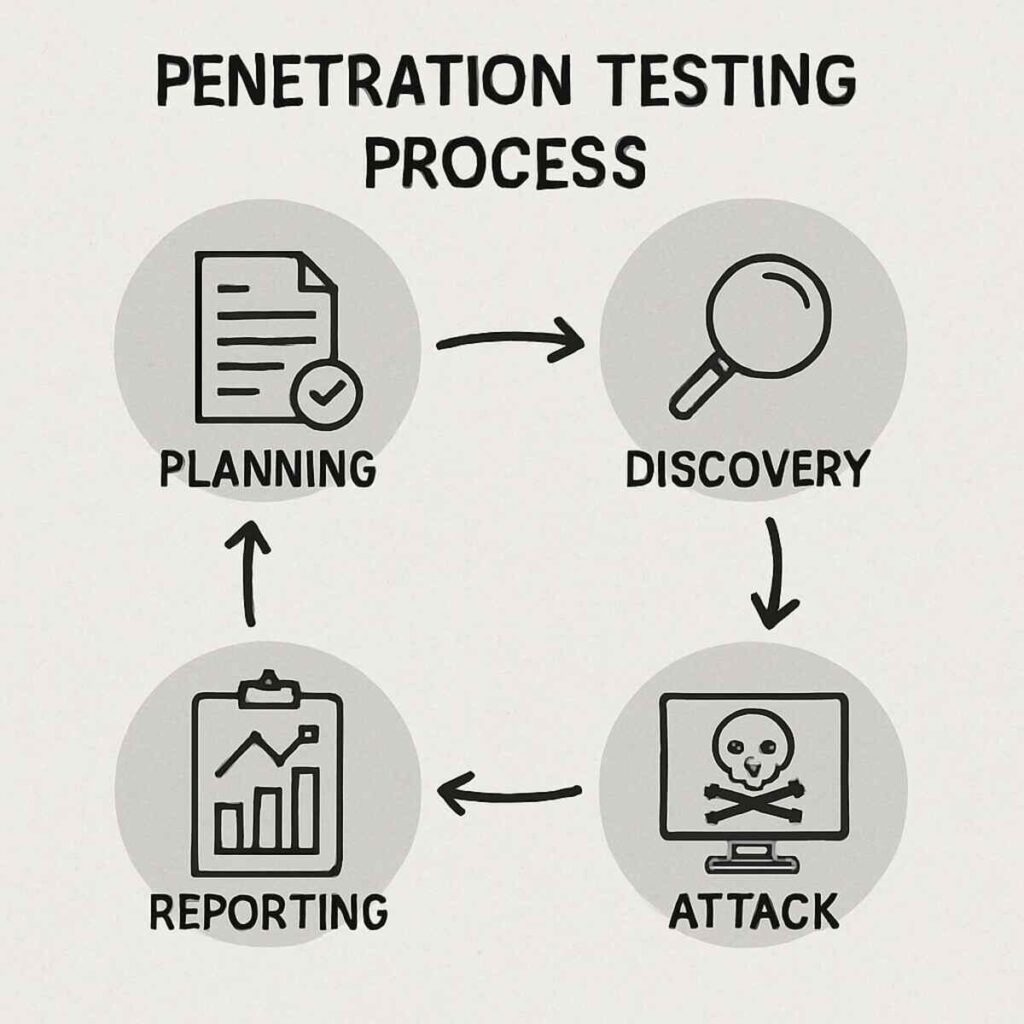
Let’s walk through the penetration testing process, step by step:
- Planning: Define the scope and objectives of the test. Decide what systems will be tested and what methods will be used.
- Reconnaissance: Gather information about the target systems. This is like researching your characters before writing their dialogue.
- Scanning: Use tools to identify open ports and services. Think of this as identifying the key plot points in your story.
- Exploitation: Attempt to exploit vulnerabilities to gain access. This is where the action happens, much like the climax of a novel.
- Analysis and Reporting: Document the findings and provide recommendations. This is akin to editing your manuscript for clarity and impact.
- Remediation: Address the identified vulnerabilities. Just like revising your draft to eliminate plot holes and strengthen character arcs.
Detailed Planning
The planning phase is critical to the success of a penetration test. It involves defining the scope, objectives, and methodologies of the test. During this phase, stakeholders collaborate to identify the systems and applications to be tested, ensuring alignment with organizational goals. This stage is akin to a writer outlining their story, setting the foundation for a compelling narrative.
Comprehensive Reconnaissance
Reconnaissance is the information-gathering phase, where testers collect data about the target systems. This phase involves researching system architecture, network configurations, and potential entry points. Like a novelist researching historical contexts or character backgrounds, reconnaissance provides valuable insights that inform subsequent testing stages.
Thorough Scanning
During the scanning phase, testers utilize various tools to identify open ports, services, and potential vulnerabilities. This phase is crucial for mapping the digital landscape and identifying areas that require further exploration. Similar to a writer identifying key plot points, scanning ensures that no critical aspect of the system is overlooked.
Strategic Exploitation
Exploitation is the action phase, where testers attempt to exploit identified vulnerabilities. This stage simulates real-world attacks to assess the potential impact of a breach. Just as a story reaches its climax, the exploitation phase tests the system’s resilience, revealing how it holds up under pressure.
In-Depth Analysis and Reporting
Analysis and reporting involve documenting the findings of the penetration test and providing actionable recommendations. This phase ensures that stakeholders understand the vulnerabilities and their implications. Much like a writer editing their manuscript for clarity, analysis, and reporting, refine the test’s outcomes for maximum impact.
Effective Remediation
Remediation is the final phase, where identified vulnerabilities are addressed and mitigated. This phase involves implementing security measures to strengthen defenses and prevent future breaches. Just as a writer revises their draft to enhance the story’s coherence, remediation ensures that the digital environment is fortified against potential threats.
Benefits of Regular Penetration Testing
Now that we’ve covered the basics, let’s explore why regular penetration testing is so important:
Stay Ahead of Threats
Cyber threats are constantly evolving. Regular pen testing keeps you one step ahead of potential attackers by identifying and addressing vulnerabilities before they can be exploited.
Proactive Defense Strategy
By conducting regular penetration tests, organizations adopt a proactive defense strategy. This approach allows them to identify emerging threats and adapt their security measures accordingly. Staying ahead of potential attackers is crucial in the ever-changing cybersecurity landscape, ensuring that defenses remain robust and effective.
Early Detection of Vulnerabilities
Regular pen testing enables early detection of vulnerabilities, minimizing the risk of exploitation. By identifying weaknesses before they are discovered by malicious actors, organizations can take swift action to address them. This proactive stance is akin to a writer catching plot inconsistencies before they impact the story’s flow.
Continuous Improvement
Regular testing fosters a culture of continuous improvement within organizations. By consistently evaluating and enhancing security measures, businesses can maintain a strong security posture. This ongoing refinement is similar to a novelist revisiting their work, ensuring the narrative remains engaging and impactful.
Protect Your Reputation
Just as a well-crafted novel enhances your reputation as an author, a secure digital environment protects your brand’s reputation. Data breaches can damage trust and credibility, something no business or individual wants.
Building Trust with Stakeholders
A secure digital environment builds trust with stakeholders, including customers, partners, and investors. By demonstrating a commitment to cybersecurity, organizations enhance their reputation and foster positive relationships. This trust is essential for long-term success, much like an author’s reputation is crucial for building a loyal readership.
Avoiding Negative Publicity
Data breaches can lead to negative publicity and reputational damage. Regular penetration testing helps prevent such incidents by fortifying defenses and minimizing the risk of breaches. Just as a writer carefully crafts their narrative to avoid plot holes, organizations must ensure their digital presence is secure to maintain a positive public image.
Enhancing Customer Confidence
Security is a key concern for customers, and a robust security posture enhances their confidence in your organization. Regular pen testing reassures customers that their data is protected, fostering loyalty and trust. This confidence is akin to a reader’s trust in an author to deliver a satisfying story.
Ensure Compliance
Many industries have regulations requiring regular security assessments. Penetration testing helps ensure you meet these compliance requirements, avoiding potential legal issues.
Understanding Regulatory Requirements
Compliance with industry regulations is crucial for avoiding legal and financial penalties. Regular penetration testing helps organizations understand and meet these requirements, ensuring they remain in good standing. This understanding is similar to a writer familiarizing themselves with genre conventions to craft a compelling narrative.
Demonstrating Due Diligence
Regular pen testing demonstrates due diligence in cybersecurity, showcasing an organization’s commitment to protecting sensitive data. This proactive stance is essential for maintaining compliance and avoiding potential legal issues. Just as an author diligently researches their topic to ensure accuracy, businesses must prioritize security to meet regulatory standards.
Streamlining the Compliance Process
Penetration testing streamlines the compliance process by providing detailed reports and documentation. These insights help organizations address potential compliance gaps and enhance their security measures. This streamlined approach is akin to a writer organizing their research to support a coherent narrative.
Optimize Security Investments
By identifying the most critical vulnerabilities, you can allocate your resources effectively, ensuring that your security investments yield the best possible results.
Maximizing Return on Investment
Regular penetration testing ensures that security investments are optimized for maximum impact. By identifying critical vulnerabilities, organizations can allocate resources effectively, prioritizing areas that require immediate attention. This strategic approach is similar to a writer investing time in developing key plot points to enhance the story’s overall impact.
Focusing on High-Priority Areas
Pen testing helps organizations focus on high-priority areas, addressing vulnerabilities that pose the greatest risk. This targeted approach ensures that security measures are both efficient and effective, minimizing the potential for exploitation. Just as a novelist focuses on essential story elements, businesses must prioritize critical security concerns.
Enhancing Overall Security Posture
By optimizing security investments, organizations enhance their overall security posture, reducing the likelihood of successful attacks. Regular pen testing provides valuable insights that inform strategic decision-making, ensuring that defenses remain robust. This enhancement is akin to a writer refining their narrative to create a compelling and cohesive story.
How Often Should You Conduct Penetration Testing?
The frequency of penetration testing depends on various factors, including the size of your organization, the complexity of your systems, and industry regulations. However, as a general rule, conducting tests at least annually is recommended. Additionally, it’s wise to perform tests after significant changes to your systems, such as software updates or infrastructure modifications.
Assessing Organizational Needs
Determining the frequency of penetration testing requires an assessment of organizational needs. Factors such as industry standards, regulatory requirements, and the complexity of digital systems play a crucial role. By understanding these elements, organizations can establish a testing schedule that aligns with their security objectives.
Adapting to System Changes
Significant changes to digital systems, such as software updates or infrastructure modifications, necessitate additional penetration testing. These changes can introduce new vulnerabilities, making it essential to reassess security measures. This adaptability is similar to a writer revisiting their manuscript after significant revisions to ensure coherence and impact.
Establishing a Routine
Establishing a routine for penetration testing helps organizations maintain a consistent security posture. By conducting tests at regular intervals, businesses can identify and address vulnerabilities promptly, minimizing the risk of exploitation. This routine approach is akin to a writer maintaining a consistent writing schedule to ensure steady progress on their manuscript.
Conclusion
Regular penetration testing is not just a technical exercise; it’s a proactive approach to safeguarding your digital assets. Whether you’re an aspiring novelist crafting a captivating story, a content marketer creating engaging material, or a graduate student navigating academic writing, the principles of risk assessment, anticipation, and thoroughness apply across the board.
So, channel your inner cyber knight and ensure that your castle-your digital presence fortified against all threats. Just like a gripping plot twist, penetration testing keeps you on your toes and ensures your story ends on a high note. Stay secure, stay vigilant, and happy writing!