


You’ve mastered your daily Wordle and are looking for the next great puzzle. But what if the best new games aren’t about spelling, but about meaning? A different kind of challenge is taking over the internet, rewarding players not for their vocabulary size, but for their ability to connect ideas. These games ask you to think sideways, exploring the hidden relationships between words in a way that feels both familiar and entirely new. To know more, check out wapienica
Imagine a library, but instead of being organized from A-to-Z, it’s arranged by concepts. All the books about ‘royalty’ are in one corner, near ‘power’ and ‘history.’ All the books about ‘science’ are in another section, close to ‘discovery’ and ‘experiments.’ This is the world of semantic puzzle games. In practice, they test your intuitive understanding of which words belong together, creating a satisfying “aha!” moment when you find the perfect connection.
This unique challenge is what makes a new type of keyword game online so compelling. Instead of just guessing letters, you’re trying to pinpoint a concept. This guide will introduce you to 10 of the most engaging games in this category, from viral sensations like Contexto and Semantle to other incredible puzzles that will stretch your mind. Each one offers a fresh take on the daily secret word guessing game format you already love.
More than just a list, this article is your strategic manual. For each game, you’ll get a clear breakdown of the rules, a preview of the interface, and—most importantly—actionable tips to improve your score. You’ll learn how to stop thinking like a dictionary and start thinking like a master of connections, giving you the edge you need to solve these puzzles faster than your friends.
What Exactly Is a “Semantic Similarity” Game?
At the heart of a “word proximity puzzle” is a simple but powerful idea: words can be mapped out like places. Imagine a giant, invisible map of every word in the English language. On this map, words aren’t arranged alphabetically; they’re placed based on meaning and context. “Hot” is close to “warm,” while “icy” is on a different continent entirely. The goal of these games is to find a secret word by guessing other words and seeing how “close” you are on this map of meaning. This is the core of any semantic similarity game explained simply.
But how does a computer build this map of meaning? It doesn’t use a dictionary. Instead, an AI program reads a staggering amount of text from books, articles, and websites. By analyzing trillions of sentences, it learns which words tend to show up in the same “neighborhoods.” It notices that “coffee” often appears near “mug” and “morning,” so it places them close together. The “closeness” score you see in the game is simply the distance between two points on this massive, computer-generated map.
Because the map is built on context, not definitions, you get fascinating results. The word “king,” for example, might be programmatically “closer” to “throne” than it is to “ruler.” Why? Because in all the text the computer analyzed, the word “king” appeared alongside “throne” far more frequently and consistently. You’re not just guessing synonyms; you’re trying to figure out which words share the same world.
Game #1: Semantle – Your First Foray into the Semantic Deep End
Our first stop on this tour of semantic puzzle games is Semantle, and it throws you right into the deep end. Instead of ranking your guesses from 1st to 1000th closest, Semantle gives you a “temperature” score. A high score means your guess is getting “warmer”—it’s closer to the secret word on that giant map of meaning we talked about. But be warned: Semantle is famously tough. It’s not unusual for your first dozen guesses to be frustratingly “cold,” meaning they’re in completely different contextual neighborhoods.
Faced with this blank slate, how do you find the secret word based on clues you have to generate yourself? Instead of guessing random words, start with a simple strategy called “Category Probing” to get your bearings.
- Guess a concrete noun (e.g., table).
- Guess an abstract concept (e.g., justice).
- Guess an action or verb (e.g., run).
By comparing the temperature scores of these completely different types of words, you can figure out what kind of “world” the secret word lives in. If table scores higher than the others, you know you’re likely looking for a physical object.
This strategic approach transforms the game. Even a “cold” score becomes a victory because it tells you where not to look. If justice scores near zero, you’ve successfully eliminated a huge category of abstract ideas. This unforgiving but rewarding process makes Semantle a true test of your semantic intuition. But if you’re looking for a gentler experience, the next game might be more your speed.
Game #2: Contexto – A Gentler Way to Guess the Secret Word
If Semantle’s abstract “temperature” score left you feeling a bit lost in the semantic woods, then its cousin, Contexto, will feel like a well-lit path. This game swaps vague warmth ratings for simple, concrete feedback: a numerical rank. After each guess, the game tells you exactly how close you are, from #1 (the secret word) to #1000 or beyond. Seeing that your guess of ocean is the 24th closest word while river is 5th gives you a direct and easy-to-understand clue about where to go next, making it a fantastic starting point for new players.
The real beauty of this unlimited word guesser lies in its sorted list, which updates with every single attempt. You aren’t just guessing into a void; you’re actively building a map to the answer. Seeing that your previous guesses for king and queen are ranked 10th and 12th respectively doesn’t just tell you you’re close—it shows you the neighborhood you’re in. The secret to how to get better at Contexto is to use this list to triangulate your position, refining your ideas based on which words are clustering together near the top.
Ultimately, Contexto offers a more structured way to play with word relationships. It’s one of the best games similar to Semantle because it works the same mental muscles, but it provides a clearer feedback loop that feels less like guesswork and more like strategic deduction.
How to Stop Guessing and Start Winning at Contexto and Semantle
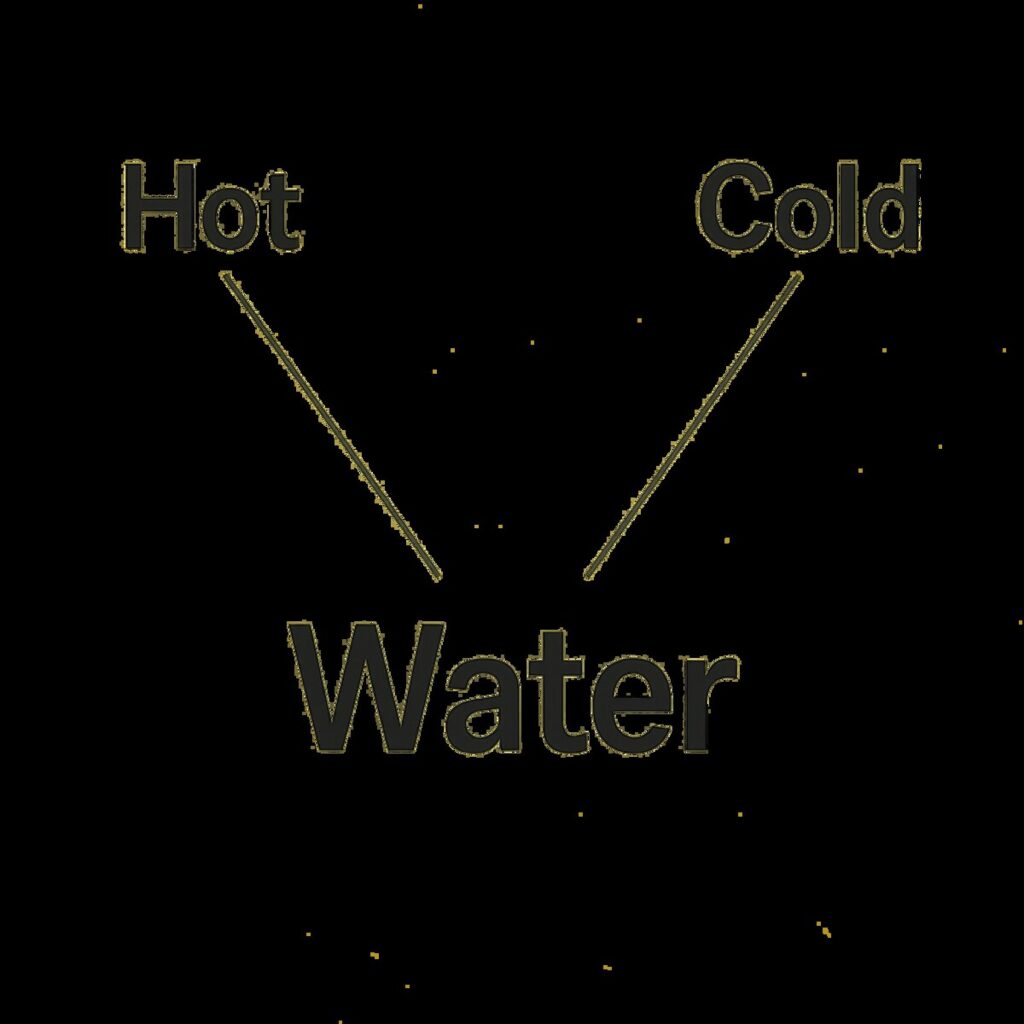
If you’ve ever felt like you’re just throwing random words at the wall, you’re not alone. The leap from guessing to winning comes from learning a simple thinking method called Triangulation. Instead of focusing on one “warm” word, your goal is to find two and guess what lies between them. Imagine you find out hot is close, but cold is also surprisingly close. What concept connects them? You can triangulate towards words like temperature, water, or even weather. This turns blind guessing into a targeted search.
To make this search even more effective, you can use a technique called Category Laddering. Think of it as moving up and down a ladder of ideas. If your guess of dog gets a high rank, you have two choices. You can climb “up” the ladder to a broader category like animal or pet to see if you’re in the right general zone. Or, you can climb “down” to more specific ideas like poodle, bark, or leash. Learning how to get better at Contexto involves using its ranked list to see which rung of the ladder is warmest.
The real strategic shift happens when you know when to stop exploring and start pinpointing. The goal of Triangulation and Laddering is to find the correct “neighborhood” of meaning—say, “musical instruments.” Once you’re confident you’re in the right place, you stop guessing broad concepts like music or sound. Instead, you switch tactics and rapidly guess every specific item in that category: guitar, piano, drum, flute, violin.
These approaches transform the game from a matter of luck into a test of logical deduction. This analytical thinking applies to any word association puzzle, including Redactle. The key is finding a game with the feedback style that helps you think best.
Game #3 & 4: Semantle vs. Contexto—Which Daily Puzzle Is Your Perfect Match?
That question of feedback style leads directly to the main event for many players: Semantle vs. Contexto. While both games test your understanding of word relationships, they offer completely different experiences. Choosing between them isn’t about which is better, but about what kind of puzzle-solver you are. One is a mysterious expedition into the unknown; the other, a guided scavenger hunt with a clear map.
To find the best word association puzzle online for you, consider these key differences:
- Feedback: Semantle gives you an abstract “temperature” score, leaving you to interpret the vague clues. In contrast, Contexto provides a concrete ranked list, showing you exactly how your guess fits in.
- Difficulty: Semantle is famously tough, often requiring hundreds of guesses to find the right path. Contexto is far more approachable, with its ranked list offering a clearer road to victory each day.
- Best For: Semantle is perfect for the purist who loves a deep, abstract challenge and the thrill of a hard-won discovery. Contexto is ideal for players who want a fun, solvable daily puzzle that feels more like a race than a marathon.
If you enjoy a guided path like Contexto’s but want to apply your logical skills to something other than word meaning, our next game is exactly what you’re looking for. Prepare to become a Wikipedia detective.
Game #5: Redactle – The Ultimate Wikipedia Detective Challenge
If you’ve ever wanted to feel like a linguistic detective, Redactle is your game. It presents you with an entire Wikipedia article where almost every word has been blacked out. Your only job is to figure out the article’s title. Every time you guess a word correctly—say, “history”—it gets revealed everywhere it appears in the text. This is the ultimate challenge where you must find the secret word based on clues you slowly uncover yourself, turning a wall of black boxes into a readable page.
While your first instinct might be to guess big, important topic words like “science” or “war,” the most effective Redactle game strategy is completely counter-intuitive: start by guessing the most common, boring words in the English language. Think “the,” “is,” “of,” “in,” and “a.” These guesses won’t reveal the topic, but they will reveal something far more valuable: the article’s structure. You’re essentially building the skeleton of the article first, which gives you the framework to figure out what it’s about.
Suddenly, the game isn’t about guessing the topic, but about reading the patterns. Once the structure is visible, you can spot major clues. A revealed phrase like “(1922 – 2005)” instantly tells you the article is about a person and their lifespan. A long list of single, capitalized words might be a list of countries or cities. By decoding the sentence structure, you transform from a random guesser into a master detective. This skill for finding hidden patterns is the perfect warm-up for a game that is all about grouping words that seem to have nothing in common.
Game #6: NYT Connections – How to Find the Pattern When Words Seem Unrelated
If you enjoy the pattern-finding rush from Redactle, you’ll love the daily challenge of NYT Connections. The game presents you with 16 words, and your task is to sort them into four secret groups of four. The catch? The connections are rarely straightforward. You might see words like “Stool,” “Gossip,” “Dish,” and “Spill,” which seem totally random until you realize they can all be followed by the word “Pigeon” (Pigeon stool, Pigeon gossip, etc.). This is a true vocabulary challenge word game that tests your ability to think outside the box.
The key to mastering this best word association puzzle online is to understand how the creators think. Most categories fall into one of four sneaky types:
- Classic Categories: Items that belong to a simple group (e.g., KINDS OF PASTA).
- Fill-in-the-Blank: Words that all precede or follow the same word (e.g., FIRE ___: Ant, Drill, Escape).
- Shared Sounds/Spellings: Groups based on homophones or spelling patterns (e.g., SOLE and SOUL; or words that are palindromes).
- Slang or Metaphors: Words that share a secondary, non-literal meaning (e.g., BOMB, FLOP, and TURKEY are all terms for failures).
This is where the game gets deviously clever with “red herrings”—words that seem to fit a category but actually belong elsewhere. You might spot five different types of fish, but only four of them form the correct group. When you’re stuck on a group that feels almost right, that’s your cue. Don’t abandon your idea entirely. Instead, identify the one word that feels like the weakest link and try swapping it for a better candidate from the remaining words. This simple “one-away” strategy is often all it takes to crack the code.
Games #7-10: Four More Amazing Word Puzzles to Try Today
Once you’ve mastered the art of finding hidden connections, you might find yourself hungry for even more variety. To keep your daily puzzle habit fresh and exciting, here are four different types of games that each offer a unique challenge.
Puzzgrid is for those who love the format of NYT Connections but wish they could play more than once a day. As one of the best games similar to NYT Connections, it offers the same 16-word grid challenge but with a timer and leaderboards, making it a thrilling, high-speed alternative. Because it’s an unlimited word guesser free of charge, you can practice as much as you want.
A completely different kind of challenge is Google Feud, a brilliant word puzzle based on search data. The game gives you the beginning of a search query, like “can you eat…,” and you have to guess the top 10 ways Google autocompletes it. The secret is to think like the average internet user, not a culinary expert.
Meanwhile, the New York Times has added another hit to its roster with Strands. It looks like a classic word search, but there’s a clever twist: all the words are related to a secret theme. Your first job is to find the “spangram”—a special word that spans the board and reveals the puzzle’s theme, making the rest of the words easier to spot.
On the more chaotic side of the spectrum is the infamous Password Game. This isn’t about guessing a password; it’s about creating one that follows a list of increasingly bizarre and contradictory rules. It’s less of a brain-teaser and more of a hilarious exercise in frustration that will have you laughing at its absurdity.
Each of these games, from the logical to the ludicrous, offers a new way to play with words. They prove that the most engaging puzzles aren’t just about vocabulary, but about understanding the hidden rules of a system—whether that system is the human brain, a search engine, or a comically evil password form.
The Real Secret to Winning: How to Think Like the Game’s Creator
Games built on search data, word associations, or even bizarre password rules share a common pattern. None of these puzzles are just about having a big vocabulary. They are about cracking a code. Whether it’s guessing how a crowd thinks in Google Feud or finding a hidden theme in Strands, the real challenge is figuring out the secret logic the game is built on. Winning isn’t about knowing the right words; it’s about understanding the system.
This shift in thinking is key. The breakthrough moment comes when you stop thinking like a person and start thinking like the program. For example, in a word proximity puzzle like Contexto, the game doesn’t understand that “king” and “queen” are royalty. It only knows that in the vast library of text it was trained on, those two words appear close together very frequently. This is also the secret to figuring out how to get better at Contexto; your goal isn’t to find a poetic connection, but a statistical one. The computer is a brilliant but literal-minded partner.
The ultimate strategy for any semantic puzzle game is to change the question you ask. Don’t just ask, “What word feels related?” Instead, ask, “Based on the clues I’m getting, how is this game deciding what’s related?” Are words linked by a common topic, a shared context, or just data? Once you start looking for the rules of the game itself, you’ve moved from being a player to being a detective—and that’s when you’ll truly start to win.
You’re Ready to Play: Pick Your First Game and Start Solving
These puzzles no longer need to feel like random luck. You’re now armed with specific strategies for cracking the code and making every guess count. To put your new skills to the test, choose your starting point based on your personality. If you love a deep challenge, try Semantle and its category-probing strategy. For a satisfying daily win, open Contexto and use its sorted list to your advantage. And if you enjoy clever, lateral thinking, today’s Connections puzzle is waiting.
The best way to start is to pick one game that matches your style. Apply a single strategy from this guide to today’s puzzle and see how it transforms the experience from guesswork to a satisfying challenge.